Explore our top-tier catalog of commercial and residential high-capacity workstation systems engineered for optimal ergonomics and structural durability.
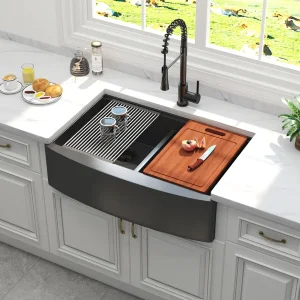
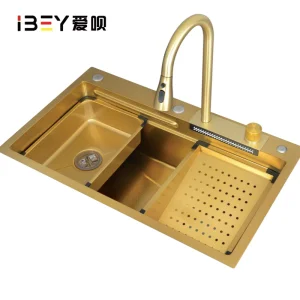
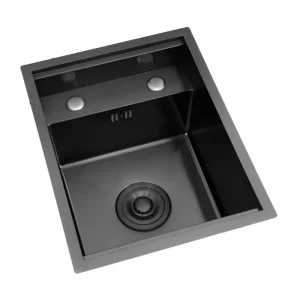
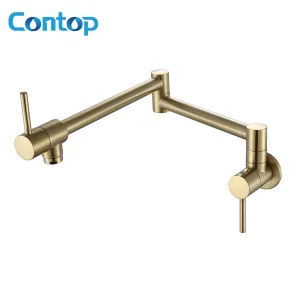
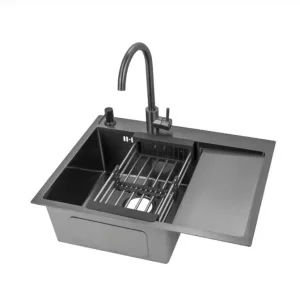
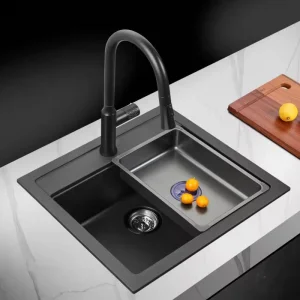
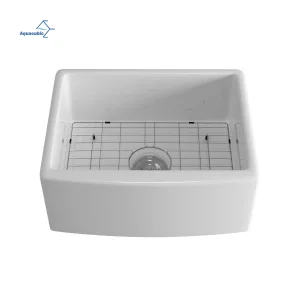
The global kitchen plumbing fixture landscape has experienced a monumental paradigm shift. Once treated as mere utility basins, kitchen sinks have evolved into dynamic culinary centers. Driven by spatial constraints in urban architecture and an increasing consumer preference for professional-grade home culinary gear, the workstation kitchen sink has emerged as the fastest-growing category. At the center of this product revolution is the unmatched production infrastructure in China.
China's workstation sink factories supply over 70% of the world's premium kitchen basins. Through systemic integration of metallurgical supply chains, robotic tooling, and strict international standards compliance, Chinese manufacturers offer global buyers a unique value proposition: unrivaled raw material efficiency, rapid engineering prototyping, and robust design scalability.
As a global sourcing executive or commercial real estate developer, navigating this dynamic landscape requires evaluating manufacturing clusters based on E-E-A-T principles. This whitepaper analyzes the engineering capabilities, material sciences, logistical setups, and compliance frameworks that distinguish China's top workstation sink factories.
An industry leader driving innovation, rigorous quality control, and global scale in kitchen appliances and lifestyle solutions.
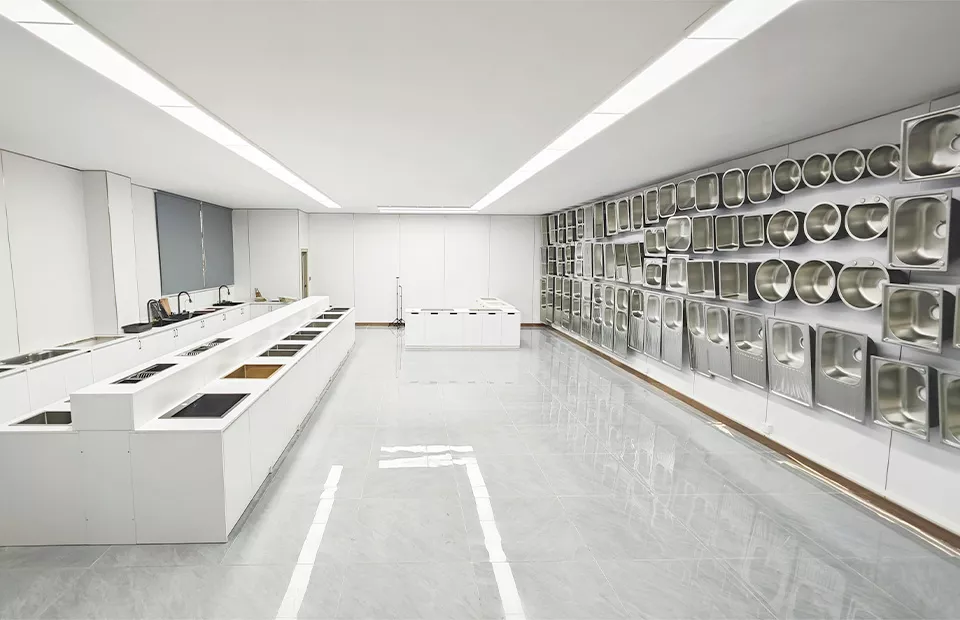
Guangzhou Nura Kitchen Co., Ltd. is a leading manufacturer and supplier specializing in innovative kitchen appliances and cooking solutions. Located in Guangzhou, Guangdong Province, the company operates modern production facilities equipped with advanced assembly lines, research and development centers, and quality inspection systems. Nura Kitchen focuses on creating durable, user-friendly appliances designed to meet the needs of modern households, offices, and commercial kitchens.
The company’s main business includes the production and distribution of electric cooking pots, electric lunch boxes, electric kettles, water heating cups, and multifunctional kitchen devices. These products are designed to improve cooking efficiency, save time, and provide convenient solutions for daily meal preparation. Nura Kitchen also offers customized solutions for bulk buyers and international distributors, ensuring high-quality products and reliable service for a wide range of customers.
Guangzhou Nura Kitchen employs a skilled team of engineers, product designers, quality control specialists, and sales professionals. The company emphasizes strict quality management, continuous innovation, and customer-oriented service. By combining practical designs with advanced technology, Nura Kitchen delivers kitchen appliances that enhance convenience, efficiency, and safety in cooking. Committed to excellence, Guangzhou Nura Kitchen Co., Ltd. continues to expand its reach in both domestic and international markets, providing reliable, smart, and innovative kitchen solutions.
Through state-of-the-art manufacturing integration, Nura Kitchen delivers specialized ODM partnerships. Our production floors feature automated robotic arms and precision stamping presses designed for kitchen equipment and premium sink fabrications. This ensures strict tolerances and consistent product geometry across high-volume production runs.
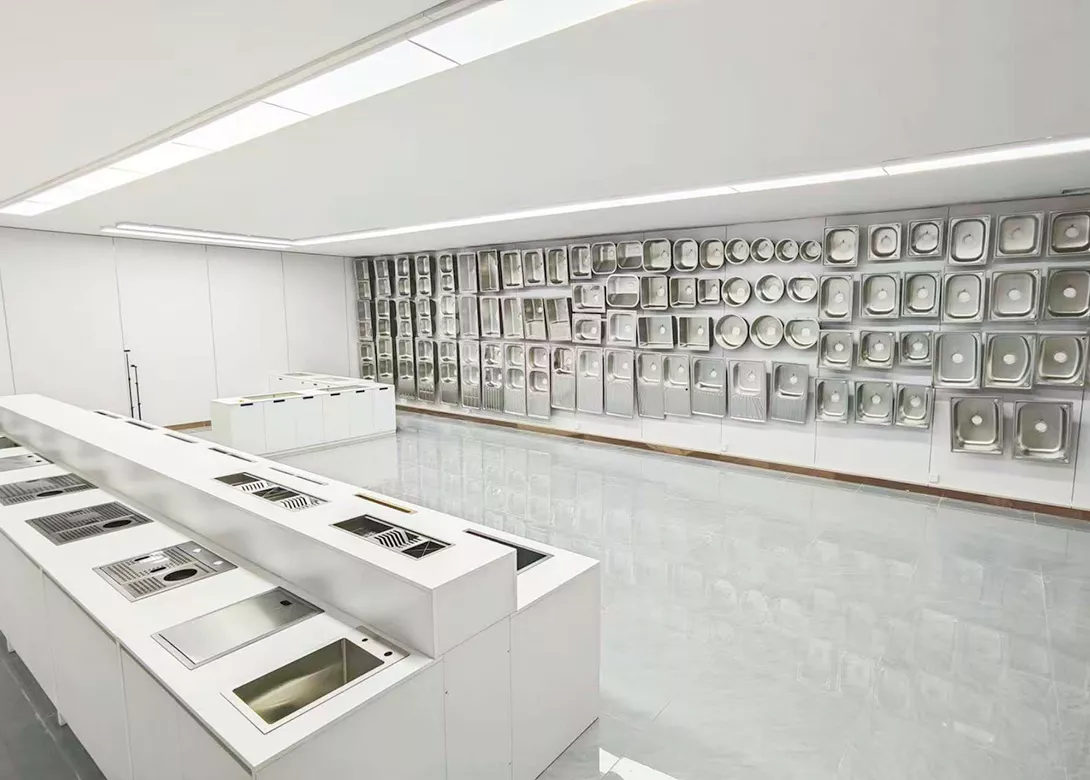
Discover the strategic foundations that enable high-precision output, rapid design iterations, and highly optimized cost structures.
Located in the heart of China’s premium raw material corridor, our partner factories source certified SUS 304 and 316 stainless steel coils directly from state-owned mills. This proximity ensures lower raw material transit fees, stable carbon levels, and trace element compliance.
To eliminate variation, factories utilize precision tooling including CNC fiber laser cutting, automated water-hydraulic presses, and robotic welding centers. These technologies enable consistent micro-radius corners (R0 to R10) and smooth hairline finishes.
Workstation sinks rely heavily on dynamic, sliding accessories. The industrial cluster in Guangdong allows for integrated sourcing of custom-fitted cutting boards, rolling drying racks, colanders, and high-performance faucets with minimal turnaround times.
For international sourcing directors, structural integrity is non-negotiable. Top China workstation sink factories construct premium ranges using AISI 304 Stainless Steel, featuring an optimal blend of 18% Chromium and 8% Nickel. This metallurgical profile guarantees superior resistance to localized pitting and galvanic corrosion in residential and commercial environments.
Heavy-duty workstation sinks are typically produced in either 16-gauge (1.5mm) or 18-gauge (1.2mm) configurations. Choosing a 16-gauge model offers increased structural rigidity, reduces drumming noise from disposal vibrations, and helps prevent dents caused by heavy cast iron cookware.
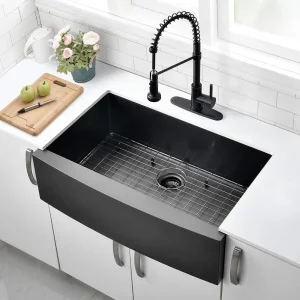
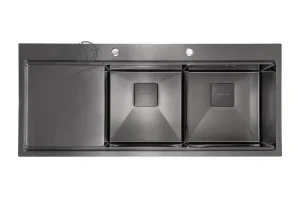
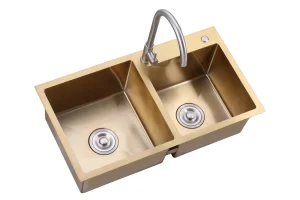
Modern consumer preferences have shifted toward matte black, gunmetal, and brushed gold sinks. To achieve these finishes, premium manufacturers employ Physical Vapor Deposition (PVD) combined with a hydrophobic nano-coating. During PVD processing, the stainless steel substrate is bombarded with ionized metal particles inside a high-vacuum chamber. This integrates the color layer at the molecular level, dramatically increasing scratch resistance compared to traditional painted finishes.
Additionally, the application of a nano-coating creates a high-density molecular barrier that elevates the surface tension. Water rolls off without leaving spots, and oil-based residues struggle to adhere, simplifying daily cleanup for the end user.
Exporting plumbing fixtures to Western markets requires strict compliance with localized water management standards. The most critical certifications for the North American market include cUPC (Uniform Plumbing Code) and ASME A112.19.3/CSA B45.4. These guidelines mandate precise structural dimensions, load-bearing capacities, and non-toxic materials.
Top-tier factories provide third-party validation certificates (IAPMO, Intertek) with every shipment. For the European market, compliance with EN 13310 standards and CE marking is mandatory. In Australia and New Zealand, WaterMark certification is required, verifying backflow prevention and lead-free compliance.
Procurement teams must navigate international trade regulations, including anti-dumping duties on Chinese stainless steel sinks in countries like the USA and Canada. Top-tier suppliers address this challenge through strategic manufacturing models, including multi-regional facilities, or by shifting product focus toward high-end quartz composite workstation sinks and specialized ceramic options.
To maximize market share, professional kitchen distributors segment workstation sink lines into three distinct, target-rich application sectors:
Key answers to the most common technical and logistical questions asked by global supply chain managers and buyers.
For custom OEM/ODM stainless steel models requiring custom stamping molds, the standard MOQ typically ranges from 100 to 200 units per size. For standard catalog products with existing tooling, factories can often accommodate lower test volumes starting at 50 units, provided the overall container shipment is consolidated.
Top-tier exporters use DR (Dezincification Resistant) lead-free brass or medical-grade SUS 304 cores for internal fluid pathways. Regular batch analysis using spectrometer technology verifies lead levels remain below the 0.25% weighted average required by NSF/ANSI 372 standards.
Both methods are complementary. Professional factories apply a dense polyurethane anti-condensation coating across the entire exterior basin. This prevents sweat-dripping inside wood cabinets, while thick, open-cell rubber dampening pads (typically 3mm thick) are applied to the bottom and side walls to minimize noise from running water and garbage disposals.
Quality control protocols follow a multi-stage process: Incoming Material Testing (raw steel coil thickness and composition checks), In-line Dimensional Inspection (verifying angle precision and laser weld tolerances), Surface Polish Assessment (ensuring uniform satin or nano finish), and final Salt-Spray Testing (subjecting random batch samples to corrosive environments to verify rusting resistance).
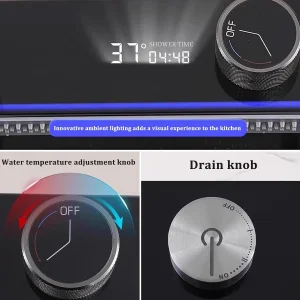
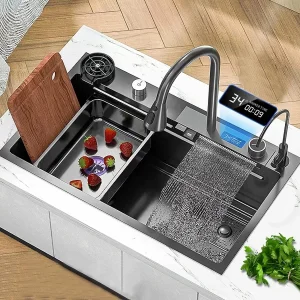
Discover our specialized product lines featuring digital temp-control displays, custom nano-coatings, and space-saving modular accessories.
 Nura Kitchen