Explore our featured engineered stainless steel and quartz composite sinks built for modern culinary spaces, customized to client requirements.
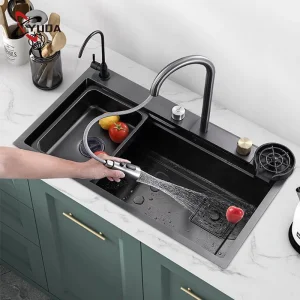
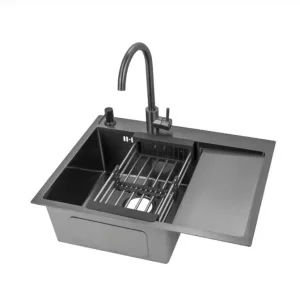
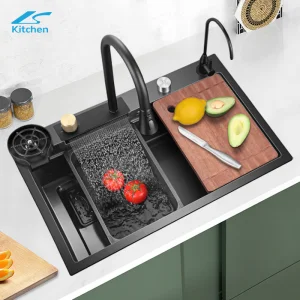
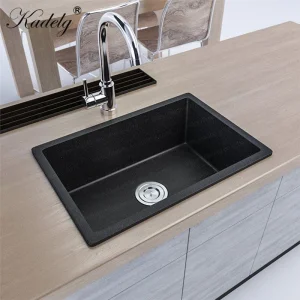
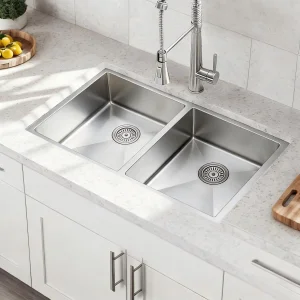
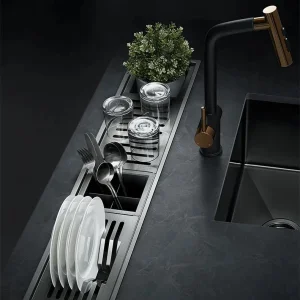
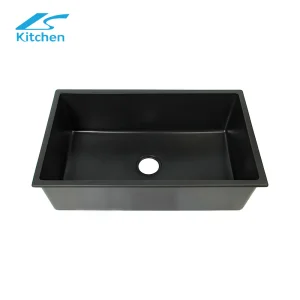
The contemporary global architectural landscape has shifted from treating the kitchen sink as a basic utility to positioning it as a highly integrated hub of residential and commercial design. Today's commercial developments, luxury residential properties, and high-performance workplaces require sinks that combine structural integrity, ergonomics, and sophisticated visual styling. Urbanization, expanding real estate sectors, and shifting consumer preferences toward open-concept designs have accelerated the market for premium kitchen fixtures. As culinary spaces blend with living zones, the demands placed on manufacturing precision, surface durability, and smart hardware integration have reached unprecedented levels.
From an industrial standpoint, manufacturers must respond to evolving macroeconomic currents. Material science has progressed beyond standard grade steel to encompass advanced metallurgical solutions, titanium-enriched PVD nano-coatings, and complex quartz composite structures. In major import markets such as North America, Western Europe, and Australia, specifications call for products that comply with rigorous certification regimes. These conditions require factories to run highly sophisticated production lines that utilize automated welding, deep-drawing pressing, and manual custom fabricating processes to satisfy diverse, high-volume project demands.
Guangzhou Nura Kitchen Co., Ltd. is a leading manufacturer and supplier specializing in innovative kitchen appliances and cooking solutions. Located in Guangzhou, Guangdong Province, the company operates modern production facilities equipped with advanced assembly lines, research and development centers, and quality inspection systems. Nura Kitchen focuses on creating durable, user-friendly appliances designed to meet the needs of modern households, offices, and commercial kitchens.
The company’s main business includes the production and distribution of electric cooking pots, electric lunch boxes, electric kettles, water heating cups, and multifunctional kitchen devices. These products are designed to improve cooking efficiency, save time, and provide convenient solutions for daily meal preparation. Nura Kitchen also offers customized solutions for bulk buyers and international distributors, ensuring high-quality products and reliable service for a wide range of customers.
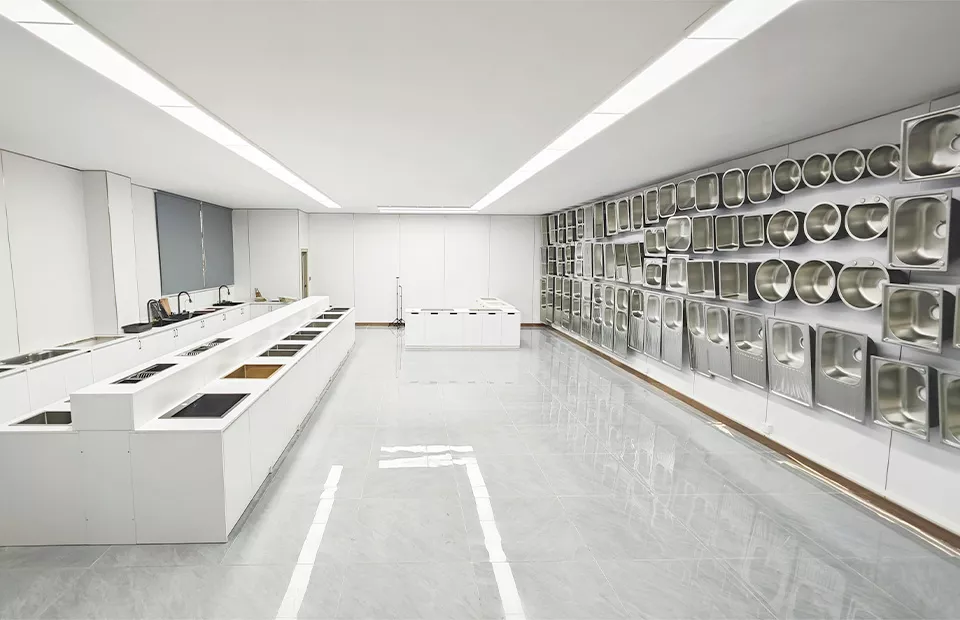
Guangzhou Nura Kitchen employs a skilled team of engineers, product designers, quality control specialists, and sales professionals. The company emphasizes strict quality management, continuous innovation, and customer-oriented service. By combining practical designs with advanced technology, Nura Kitchen delivers kitchen appliances that enhance convenience, efficiency, and safety in cooking. Committed to excellence, Guangzhou Nura Kitchen Co., Ltd. continues to expand its reach in both domestic and international markets, providing reliable, smart, and innovative kitchen solutions.
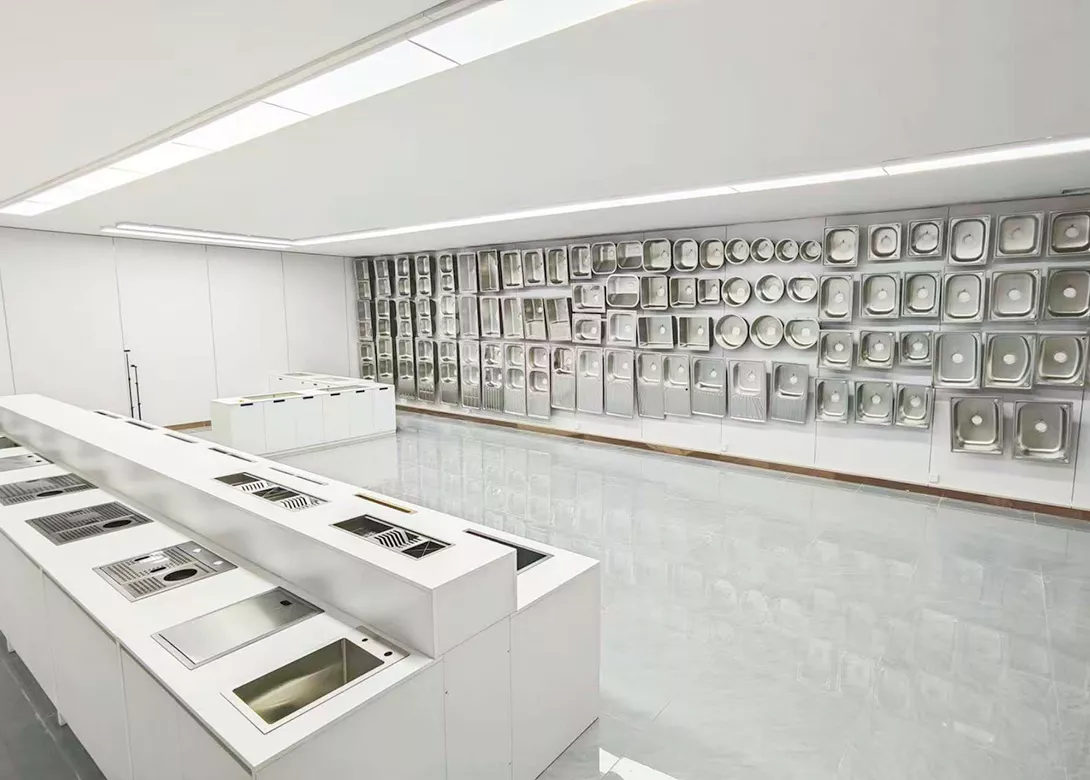
Understanding that the kitchen infrastructure ecosystem encompasses both electrical and sanitary systems, our team provides an integrated approach. Our custom OEM/ODM pipelines support real estate developers, commercial builders, and design brands looking for cohesive solutions. By aligning physical sink structures with intelligent culinary appliances, we enable our partners to source multi-category products from an advanced production hub in South China. This vertical optimization lowers import friction and ensures matching material finishes across all kitchen installations.
The market for architectural sink fixtures is characterized by several key material and design developments that address both functional challenges and aesthetic trends:
Sinks require careful adaptation to regional architectural codes, cultural habits, and installations:
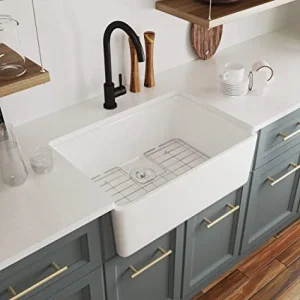
The North American residential market favors deep apron-front farmhouse sinks, wide single basins (typically 30 to 36 inches), and workstation setups. Builders must adhere to strict cUPC (Uniform Plumbing Code) and ASME standards. Sinks are expected to handle heavy garbage disposals, requiring robust drain designs with reinforced structural collars and vibration-damping pads.
European design trends lean toward minimal, flush-mount, or undermount configurations with clean, sharp geometric lines. Standard sizing is designed to fit 60cm cabinet bases. Sustainability is a major focus; products must comply with CE marks and EN 13310 requirements, focusing on lead-free brass components, recyclable composite materials, and low-waste production processes.
Brazilian and South American luxury developments frequently select bold metallic tones—such as polished gold or deep bronze—combined with built-in channel drain boards and multi-tier accessories. Sinks are designed as focal points in open-plan social kitchens, where food prep and social gatherings happen in the same space.
The Australian market demands high-grade composite materials that resist strong UV light exposure in open-air or indoor-outdoor kitchens. Top-mount and undermount configurations must fit strict architectural plans, and water systems must meet WELS (Water Efficiency Labeling and Standards) certifications to ensure efficient water usage.
We believe the next decade of kitchen design will center on digital integration, smart resource management, and circular product lifecycles. Our engineering divisions are currently developing features to meet these upcoming market demands:
Developing built-in greywater filtration modules that allow users to safely redirect light rinse water for plant irrigation or household pre-cleaning, lowering total domestic water consumption.
Integrating non-contact infrared sensors under the nano-coating surface, allowing users to control water flow, temperature, and spray patterns with simple hand gestures.
Injecting non-toxic silver-ion compounds deep into composite quartz matrices to inhibit bacterial growth on wet surfaces without using harsh chemical cleaners.
Our OEM capabilities support global distributors, property developers, and brand owners at every stage of the project lifecycle. From initial CAD drawings and prototype tooling to bulk manufacturing, surface treatment, and compliance testing, our factory ensures high product consistency. We optimize logistics by offering flat-pack outer cartons, drop-test-approved internal foam structures, and pre-sorted accessory kits, minimizing shipping damage and reducing assembly time on site.
Clients can choose exact materials (e.g., SUS304 or customized composite colors), sink depths, sound-damping undercoats, custom cutout shapes, and integrated accessory packages. Every production run undergoes automated salt spray testing, impact evaluation, and leak checks, ensuring that each sink performs reliably in challenging real-world environments.
Answers to common industry questions regarding manufacturing specifications, materials, and ordering procedures.
SUS304 contains high levels of nickel and chromium, providing superior corrosion resistance, rust prevention, and durability under harsh household chemical exposure. SUS201 contains higher levels of manganese, making it harder but more susceptible to oxidation and corrosion over time. We recommend SUS304 for premium, long-lasting residential and commercial projects.
Physical Vapor Deposition (PVD) bonds a metallic vapor layer onto the stainless steel surface at a molecular level, creating a hard ceramic barrier. This nano-coating resists scratches, repels oil and water, reduces fingerprint marks, and prevents bacterial build-up.
Yes. Our OEM/ODM capabilities allow us to produce custom designs based on CAD or 3D files. We can modify sheet metal thicknesses, bowl depths, ledge positions, drainage holes, and accessory tracks to meet your project's specific architectural requirements.
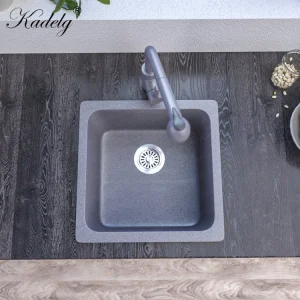
Our premium quartz composite sinks consist of approximately 80% natural quartz crystals bonded with 20% high-grade acrylic resins. This ratio ensures a non-porous surface with excellent thermal shock resistance, impact strength, and color consistency.
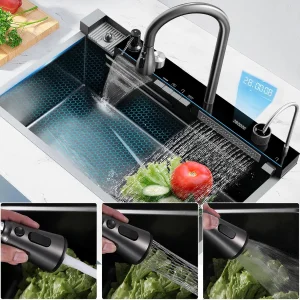
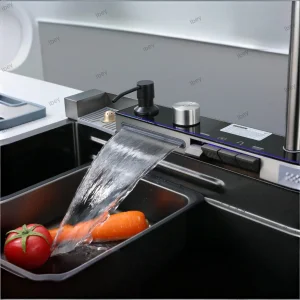
Our smart waterfall sinks feature an internal micro-hydro turbine. As water flows through the system, the kinetic energy drives a generator that powers the LED screen, displaying real-time water temperature without needing external electrical connections or batteries.
Our manufacturing processes and materials conform to international standards, including CE certification for European markets and compatibility with cUPC/ASME plumbing requirements in North America. We ensure all materials in contact with drinking water are lead-free.
Our sinks feature dense rubber sound-absorbent pads on the underside of the basin to minimize noise from running water and garbage disposals. We also apply a non-toxic anti-condensation coating to prevent moisture buildup on cabinet interiors.
Lead times depend on design complexity and order volume. Typically, custom tooling and prototype development take 20 to 30 days, followed by 30 to 45 days for mass production and quality inspection before shipping.
We pack heavy ceramic and granite sinks using custom-molded high-density foam structures inside heavy-duty multi-layer corrugated cardboard boxes. We also run ISTA drop tests to verify packaging performance during transit.
Yes. Guangzhou Nura Kitchen Co., Ltd. produces both kitchen appliances and custom sinks. We can consolidate mixed orders into a single container to optimize shipping costs and streamline your supply chain.
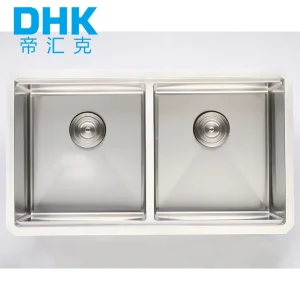
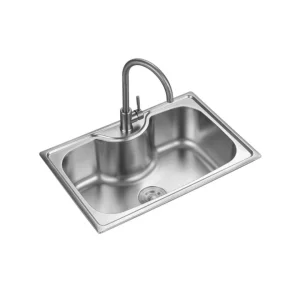
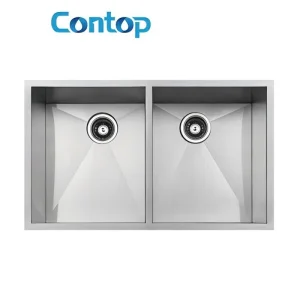
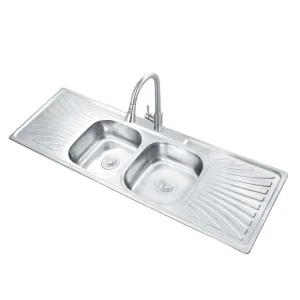
Explore our diverse collection of farmhouse, double-bowl, and smart workstation sinks designed for high-performance kitchens.
 Nura Kitchen