Explore our highly-vetted selection of heavy-duty, rust-resistant commercial and residential stainless steel and composite sinks engineered for maximum structural longevity and compliance.
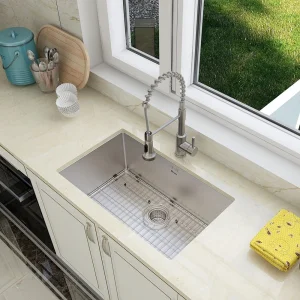
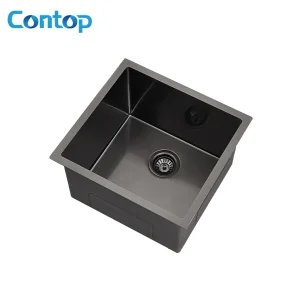
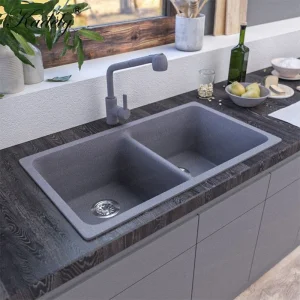
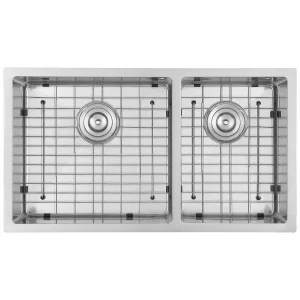
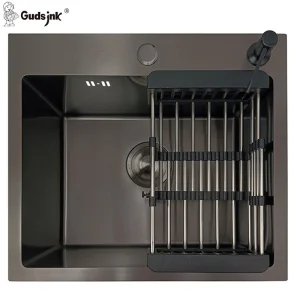
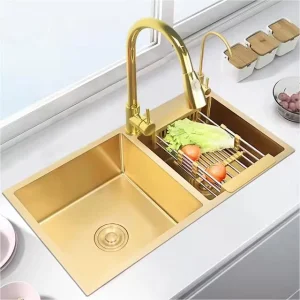
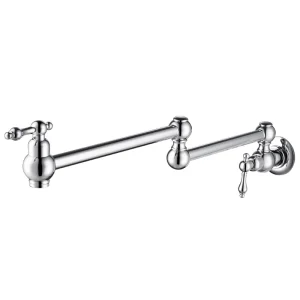
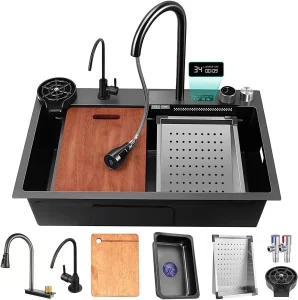
In global commercial and residential construction projects, the longevity of sanitary fittings is non-negotiable. Kitchen sinks, constantly exposed to harsh detergents, varying pH levels, high humidity, and physical impacts, represent a key vulnerability in building maintenance lifecycles. Specifying "rust-resistant sinks" requires deep technical understanding.
True rust resistance in stainless steel sinks is largely governed by the presence of Chromium (Cr) and Nickel (Ni). Grade SUS304 stainless steel contains approximately 18% Chromium and 8% Nickel. When exposed to oxygen, Chromium forms a microscopic, self-healing layer of chromium oxide ($Cr_2O_3$) on the surface of the metal. This passivation layer prevents oxygen from diffusing into the steel structure, thereby arresting oxidation.
For volume importers, understanding the core chemical variance between SUS304 and SUS201 is crucial for managing operational risk. While SUS201 contains manganese and nitrogen in place of more expensive nickel, its susceptibility to pitting corrosion under chloride environments (such as exposure to saline dishwashing detergents or coastal salty air) is significantly higher.
| Alloy / Grade | Chromium Content | Nickel Content | Corrosion Resistance Level | Recommended Applications |
|---|---|---|---|---|
| SUS304 (Standard) | 17.5% - 19.5% | 8.0% - 10.5% | High (Passivated $Cr_2O_3$) | Residential & Premium Commercial Kitchens |
| SUS201 (Economic) | 16.0% - 18.0% | 3.5% - 5.5% | Moderate (Prone to pitting) | Dry, low-humidity indoor environments |
| Nano-PVD Treated SUS304 | 18.0% + PVD Layer | 8.0% + PVD Layer | Extreme (Double protection) | Coastal projects, heavy-duty culinary use |
| Quartz Stone Composite | N/A (Non-Metallic) | N/A (Non-Metallic) | Absolute (Rust-proof structural body) | Luxury hospitality, high-end residential |
Leading Chinese manufacturing hubs have pioneered the application of Physical Vapor Deposition (PVD) combined with nano-scale oil-repellent coatings to sanitary ware. The PVD process vaporizes solid metal targets in a high-vacuum chamber, depositing a molecular layer of titanium nitride or carbonitride on the sink surface. This layer increases superficial hardness from 200 HV (standard SUS304) up to over 400 HV. The subsequent nano-coating creates an ultra-hydrophobic contact angle, causing water to bead off instantly, leaving no trace of minerals that could induce localized rust spots.
China represents over 65% of the global manufacturing capacity for high-grade sanitary ware. Sourcing from top-tier Chinese factories offers critical structural advantages.
In major manufacturing clusters such as Guangdong and Zhejiang, factories enjoy instant access to high-precision cold-rolled stainless steel coils, high-purity quartz dust, specialty polymer resins, and cutting-edge drainage components. This localized ecosystem significantly reduces internal transportation and warehousing costs, allowing manufacturers to pass these savings down to the international purchaser.
The production of premium handmade sinks requires micro-precision welding to construct tight-radius corners (R10 or R0). Chinese factories utilize multi-axis CNC laser welding robots that ensure hermetic seams with zero micro-fractures, which are typical origin points for crevice corrosion. For drawn sinks, automated hydraulic presses exceeding 1000 tons yield uniform metal thickness even at the deepest corners of the basin, preventing mechanical stress-induced corrosion.
Whether your market demands a traditional brushed finish, satin sheen, sandblasted textures, or complex colors (like Nano Gold, Matte Black, or Rose Gold PVD), Chinese suppliers feature in-house electroplating and chemical vapor deposition lines, giving them absolute control over color matching, adhesion testing, and wear resistance.
International sourcing managers must balance localized construction codes, structural certifications, and supply chain timelines. Here is how Chinese sink manufacturers deliver customized solutions across distinct market sectors:
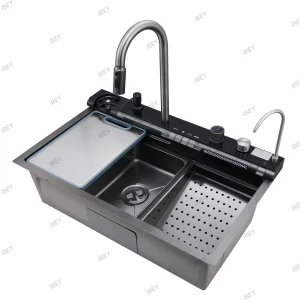
High-volume multi-family developments require standardized sizes, certified UPC/cUPC compliance, and compact packaging designs to optimize shipping container space. Integrated workstations save counter space in modern urban apartments.
Luxury hotels seek design-forward visual statements. Quartz stone composite double-bowl sinks in deep gray or black nano-coated models align with custom stone countertops while ensuring whisper-quiet acoustic insulation.
Industrial kitchens demand extreme compliance (NSF/ANSI standards). Sinks must feature heavy-gauge SUS304 (typically 16G or 14G) or SUS316, deep bowls for large stockpots, and integrated high-pressure pot fillers and fast-draining slopes.
Guangzhou Nura Kitchen Co., Ltd. is a leading manufacturer and supplier specializing in innovative kitchen appliances, sanitary installations, and cooking solutions. Located in the industrial heart of Guangzhou, Guangdong Province, the company operates modern production facilities equipped with advanced assembly lines, research and development centers, and rigorous quality inspection systems. Nura Kitchen focuses on creating durable, user-friendly appliances and fixtures designed to meet the needs of modern households, offices, and commercial kitchens.
The company’s main business includes the production and distribution of electric cooking pots, electric lunch boxes, electric kettles, water heating cups, and multifunctional kitchen devices. These products are designed to improve cooking efficiency, save time, and provide convenient solutions for daily meal preparation. Nura Kitchen also offers customized solutions for bulk buyers and international distributors, ensuring high-quality products and reliable service for a wide range of customers.
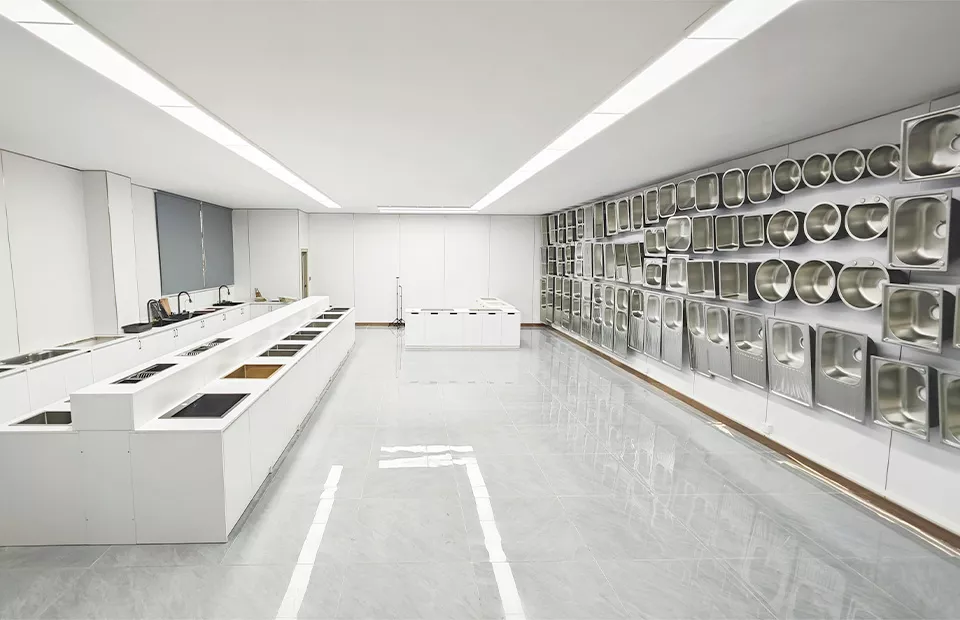
Guangzhou Nura Kitchen employs a highly skilled team of engineers, product designers, quality control specialists, and international sales professionals. The company emphasizes strict quality management, continuous innovation, and customer-oriented service. By combining practical designs with advanced technology, Nura Kitchen delivers kitchen appliances and related sanitary components that enhance convenience, efficiency, and safety in cooking. Committed to excellence, Guangzhou Nura Kitchen Co., Ltd. continues to expand its reach in both domestic and international markets, providing reliable, smart, and innovative kitchen solutions.
Their manufacturing philosophy aligns with the high-performance demands of global sourcing partners, offering a one-stop-shop for kitchens requiring integrated electrical appliances and heavy-duty, highly integrated sink and faucet systems.
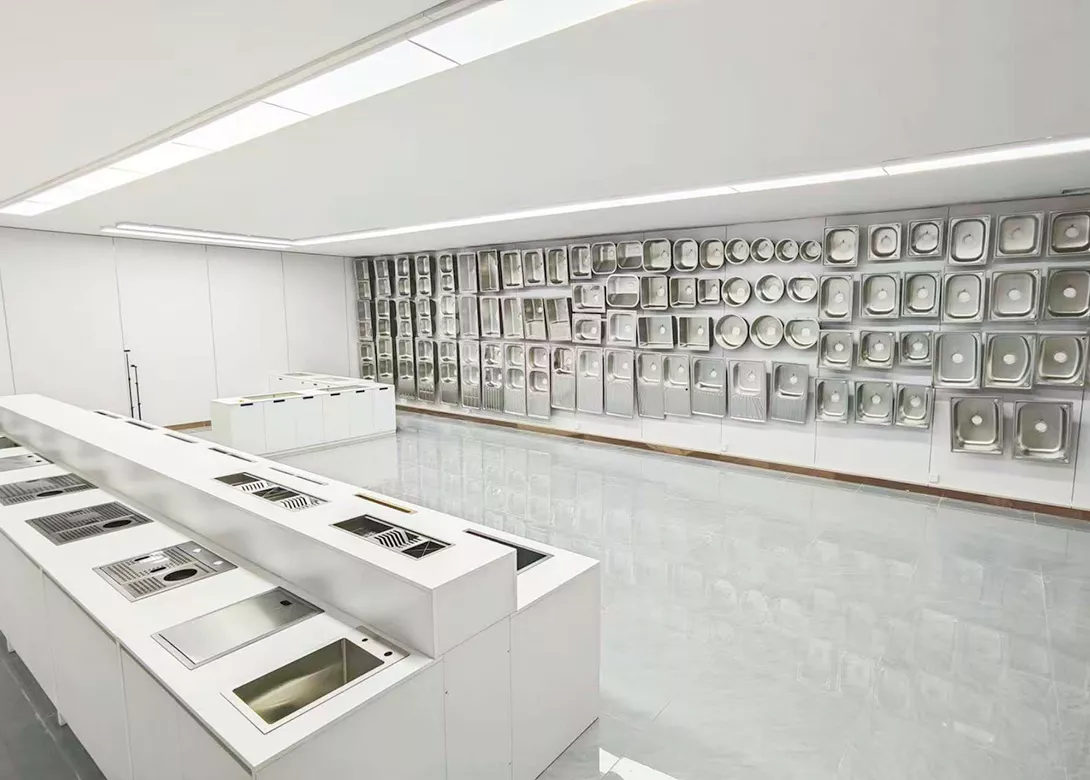
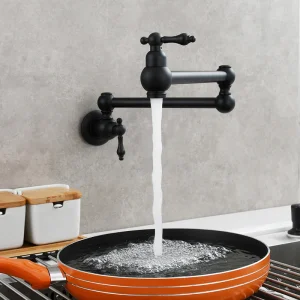
Enhance your product portfolio with high-performance faucets, space-saving extendable basins, and multi-tier prep workstations.
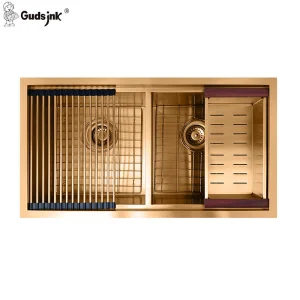
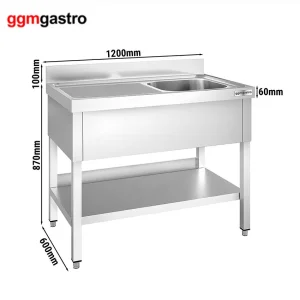
 Nura Kitchen