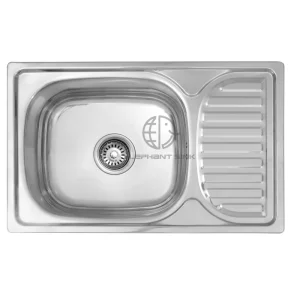
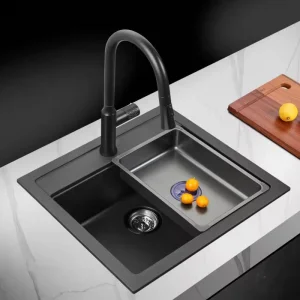
Explore precision-engineered heat-resistant sinks utilizing premium SUS304 stainless steel, high-density quartz composites, and thermal-stabilized nano-coatings designed for modern residential and commercial installations.
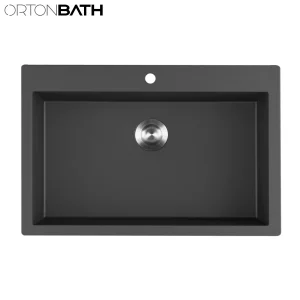
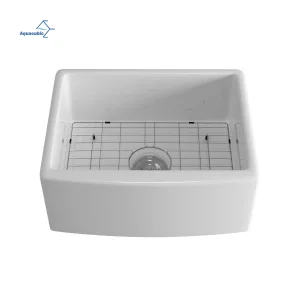
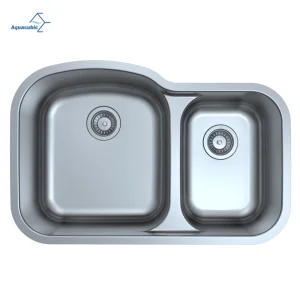
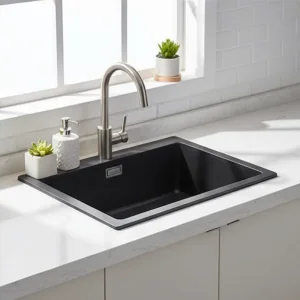
The global culinary fixture market has witnessed a paradigm shift toward high-performance, heat-resistant sinks capable of enduring severe thermal shock, chemical exposure, and intensive mechanical fatigue. Modern commercial and high-end residential spaces demand sinks that maintain structural integrity when exposed to cookware temperatures exceeding 280°C (536°F). Chinese manufacturers have consolidated their leadership in this sector by integrating industrial-grade quartz composite casting, physical vapor deposition (PVD) titanium nano-coatings, and automated deep-drawing stainless steel processes.
Technical Insight: Thermal shock resistance in kitchen sinks is defined by the material's coefficient of thermal expansion ($\alpha$) and flexural toughness. Premium granite composite sinks manufactured in China achieve a thermal resistance threshold of up to 280°C without micro-fracturing or surface discoloration due to optimized cross-linked acrylic resin matrices.
Heat resistance in sanitary fixtures is not merely a surface property; it is an inherent characteristic governed by chemical composition, crystal orientation, and thermal dissipation dynamics. Leading Chinese ODM/OEM factories utilize three primary material categories to engineer sinks capable of withstanding extreme thermal environments:
Composed of 80% natural quartz sand bonded with 20% high-grade acrylic resins. The high silica concentration provides exceptional thermal tolerance ($\le 280^\circ\text{C}$), hydrophobic self-cleaning properties, and total immunity to thermal shock cracking caused by boiling liquid immersion.
Austenitic 18/8 stainless steel enhanced with Physical Vapor Deposition (PVD). Titanium ions are bonded to the stainless steel substrate at high temperatures, creating a molecular barrier that withstands temperatures up to 300°C while preventing oxidation and scratch marks.
Fired at temperatures exceeding 1200°C, solid surface ceramic and fireclay sinks possess dense vitreous microstructures. They offer near-zero porosity, non-porous chemical resistance, and the capability to withstand direct flame proximity without thermal distortion.
| Material Type | Max Temp Tolerance | Thermal Shock Resistance ($\Delta T$) | Scratch Hardness (Mohs) | Key B2B Application |
|---|---|---|---|---|
| Quartz Composite (80/20) | 280°C (536°F) | $\Delta T = 180^\circ\text{C}$ instant drop | 6.5 - 7.0 | Luxury Residential / Architectural Projects |
| PVD Nano SUS304 Steel | 300°C (572°F) | $\Delta T = 220^\circ\text{C}$ instant drop | 5.5 - 6.0 | High-Traffic Commercial / Smart Workstations |
| Fine Fireclay Ceramic | 1000°C+ (Direct Flame) | $\Delta T = 130^\circ\text{C}$ gradual drop | 7.0 | Farmhouse / Traditional & Commercial Kitchens |
| Standard 16G Stainless Steel | 250°C (482°F) | $\Delta T = 200^\circ\text{C}$ instant drop | 4.0 - 5.0 | Standard Rental Units / B2B Volume Procurement |
B2B buyers, wholesalers, real estate developers, and brand owners in North America, Europe, and the Middle East are recalibrating their supply chain requirements. Sourcing intent has shifted from pure unit cost minimization to comprehensive lifetime durability, heat resilience, and compliance with international standards (such as cUPC, CE, and ISO 9001).
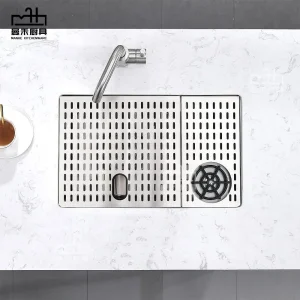
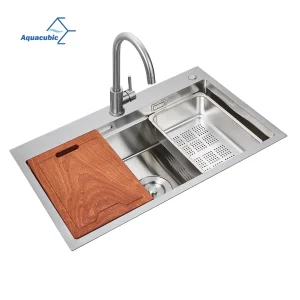
Modern commercial kitchens require multi-tier sinks featuring integrated glass rinsers, slide-in solid wood cutting boards, rainfall faucets, and automated cup washers. Heat resistance must extend across all modular accessories, ensuring hot cookware does not damage ledges or structural tracks.
Under-sink heavy-duty sound-deadening rubber pads combined with thermal anti-condensation coatings are now mandatory for high-end developments. These systems buffer noise from high-pressure water jets and prevent thermal condensation from dripping into under-sink cabinetry.
International regulations require zero heavy metal leaching (lead, cadmium) under high-temperature water exposure. Quartz matrix casting processes in top Chinese factories utilize food-grade resin systems meeting NSF/ANSI 51 safety standards.
Guangzhou Nura Kitchen Co., Ltd. is a leading manufacturer and supplier specializing in innovative kitchen appliances and cooking solutions. Located in Guangzhou, Guangdong Province, the company operates modern production facilities equipped with advanced assembly lines, research and development centers, and quality inspection systems. Nura Kitchen focuses on creating durable, user-friendly appliances designed to meet the needs of modern households, offices, and commercial kitchens.
The company’s main business includes the production and distribution of electric cooking pots, electric lunch boxes, electric kettles, water heating cups, and multifunctional kitchen devices. These products are designed to improve cooking efficiency, save time, and provide convenient solutions for daily meal preparation. Nura Kitchen also offers customized solutions for bulk buyers and international distributors, ensuring high-quality products and reliable service for a wide range of customers.
Guangzhou Nura Kitchen employs a skilled team of engineers, product designers, quality control specialists, and sales professionals. The company emphasizes strict quality management, continuous innovation, and customer-oriented service. By combining practical designs with advanced technology, Nura Kitchen delivers kitchen appliances that enhance convenience, efficiency, and safety in cooking. Committed to excellence, Guangzhou Nura Kitchen Co., Ltd. continues to expand its reach in both domestic and international markets, providing reliable, smart, and innovative kitchen solutions.
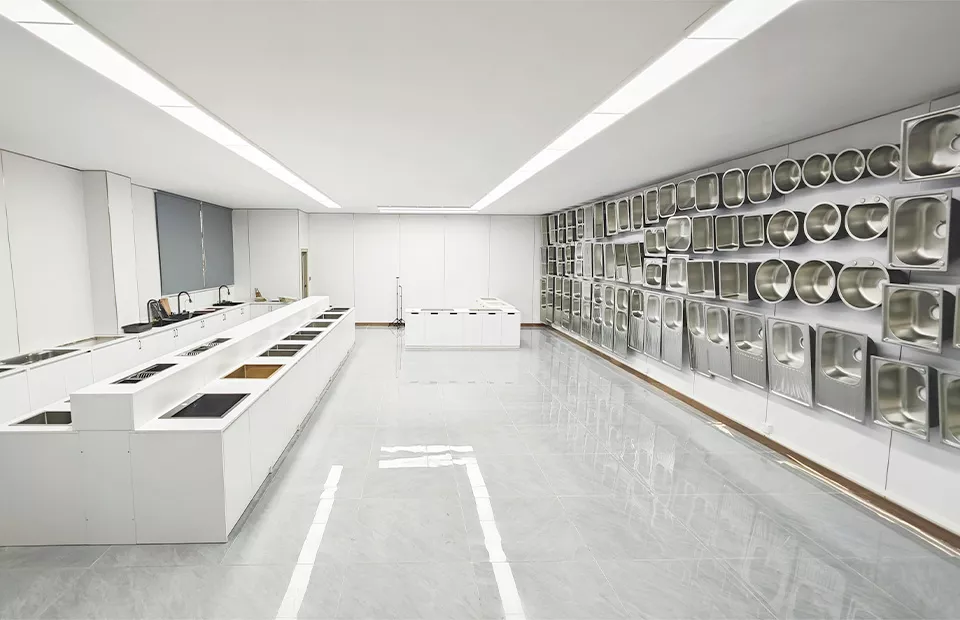
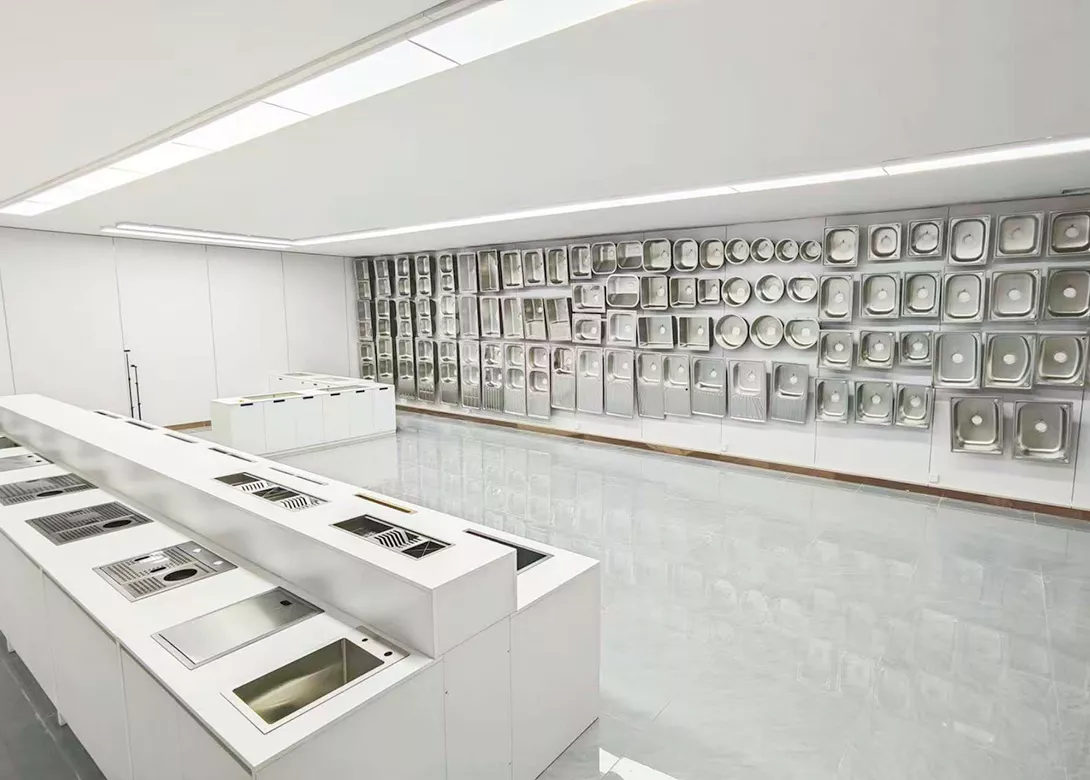
China's supremacy in the global heat-resistant sink market rests upon an unmatched industrial ecosystem. From raw material procurement (high-purity quartz sands and premium SUS304 coils) to automated robotic manufacturing, Chinese facilities offer unmatched OEM/ODM agility.
State-of-the-art 1000-ton hydraulic presses mold seamless stainless steel basins with uniform wall thickness. This prevents thermal stress localization, eliminating micro-warping when boiling oil or hot water is poured directly into the sink.
In composite quartz manufacturing, vacuum degasification eliminates air micro-bubbles from the liquid polymer matrix prior to thermal curing. This high-density solid structure achieves complete thermal homogeneity and prevents localized thermal cracking.
Robotic fiber-laser welding ensures seamless joints between aprons, bowls, and workstation ledges. Precise temperature control during welding prevents carbide precipitation in stainless steel, preserving corrosion and heat resistance.
 Nura Kitchen