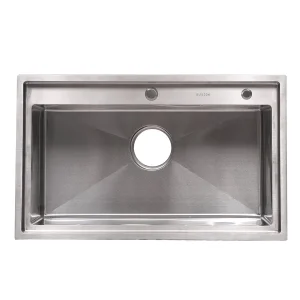
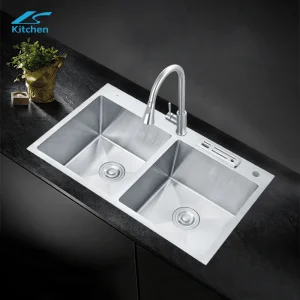
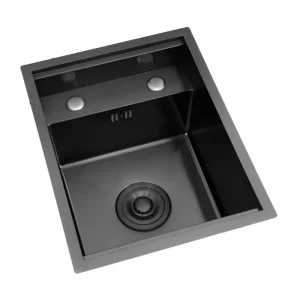
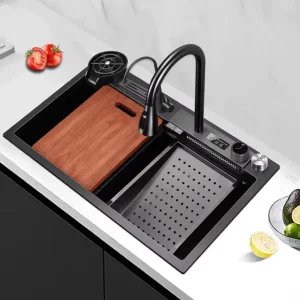
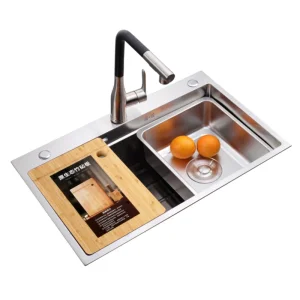
As the construction and home renovation industry experiences rapid evolution globally, commercial buyers, estate developers, and high-volume distributors require kitchen fixtures that combine structural reliability with aesthetic intelligence. China has solidified its position as the global hub for manufacturing countertop and workstation sinks, offering unparalleled advancements in materials science, automation engineering, and supply chain logistics.
The manufacturing ecosystem in China utilizes state-of-the-art metallurgical technologies to process premium materials like raw SUS304 stainless steel, composite quartz, and high-density fireclay. Unlike conventional manufacturers, Chinese countertop sink suppliers implement a proprietary 16-gauge to 18-gauge cold-rolling steel methodology, ensuring that undermount and drop-in fixtures retain structural integrity under long-term thermal pressure and structural load. These materials are enriched with precise percentages of chromium and nickel, giving them innate resistance to corrosion, oxidation, and mineral buildup.
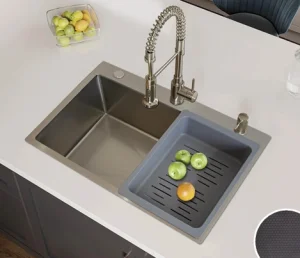
As modern kitchen dynamics shift towards multi-functional, space-saving layouts, procurement officers must look beyond simple sink basins. The modern B2B standard requires integrated culinary hubs. Recognizing this shift, manufacturers have integrated workstation ledges, built-in drainage boards, integrated cutting board racks, and multi-functional waterfall faucet designs.
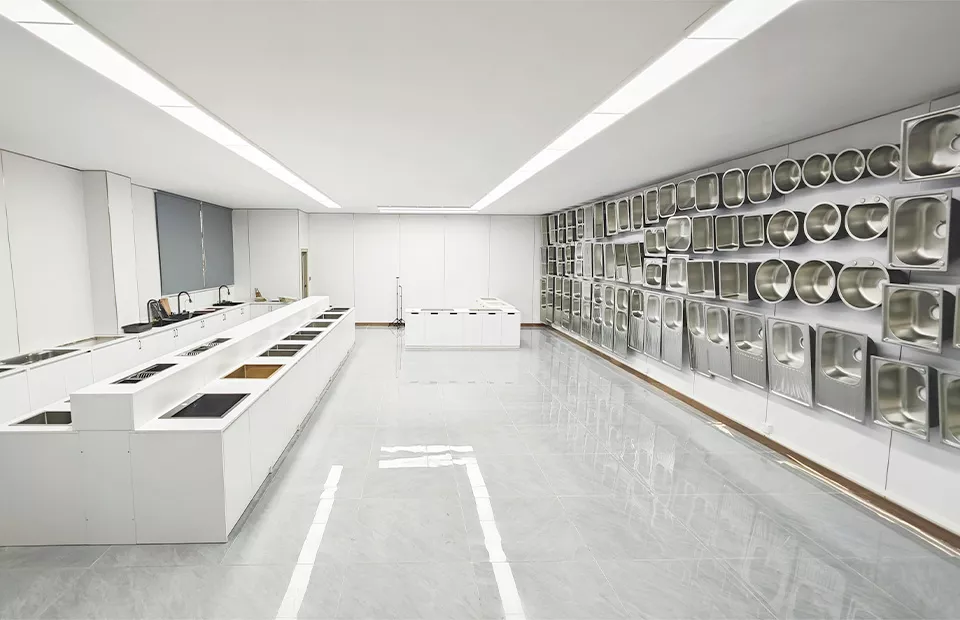
Guangzhou Nura Kitchen Co., Ltd. serves as a prime example of an integrated manufacturing partner operating at this intersection. Operating modern production facilities in Guangzhou, Guangdong Province, the company utilizes advanced assembly lines, R&D centers, and strict quality inspection systems. Nura Kitchen’s expertise in creating durable, user-friendly appliances—including electric cooking pots, lunch boxes, kettles, and multifunctional kitchen devices—enables them to apply advanced thermodynamic and electrical integration methodologies to the hardware sector.
By blending smart technologies with traditional handmade stainless steel, fireclay, and quartz composite configurations, Nura Kitchen designs products that improve preparation efficiency, save time, and optimize workflow. This capability provides international distributors and B2B buyers with access to comprehensive kitchen solutions, all verified under rigorous quality control standards.
A key strength of Chinese sink exporters is their ability to execute bespoke modifications for major real estate developments and luxury hospitality renovations. From custom outer-apron dimensions and custom positioning of drain openings to laser-etched branding and specific corner radiuses (such as R10 for easier cleaning or R0 for crisp minimalist lines), Chinese engineering teams translate complex CAD drawings into physical samples within tight timelines. This speed-to-market provides developers with a clear competitive edge when aiming to deliver upscale projects on time and within budget.
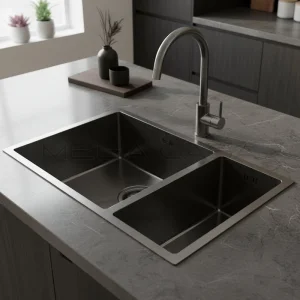
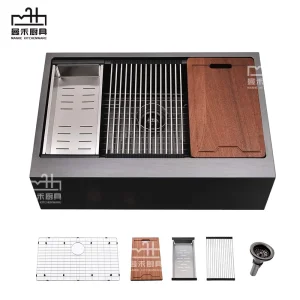
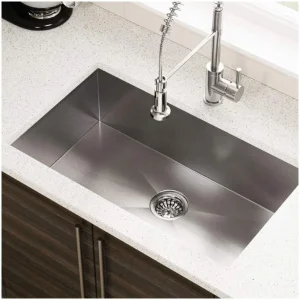
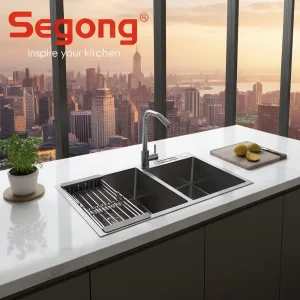
Hand-welded and structurally reinforced using 1.2mm to 1.5mm cold-rolled steel. Integrated with dual-tier ledges to transform the sink basin into an active food-prep surface with colanders, roll-up racks, and solid wood cutting boards.
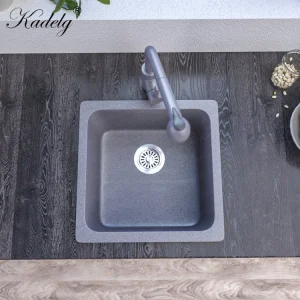
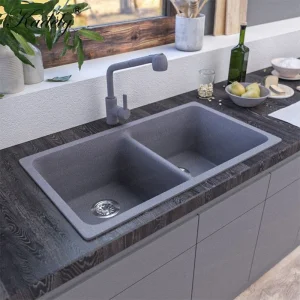
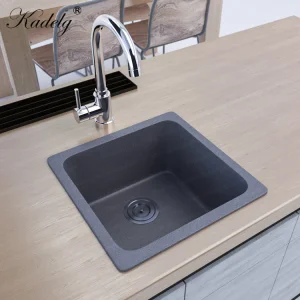
Molded under extreme pressure using 80% natural quartz sand and 20% high-grade acrylic resin. Highly resistant to thermal shock, structural chipping, and chemical etching, offering a premium matte finish popular in Australian and European markets.
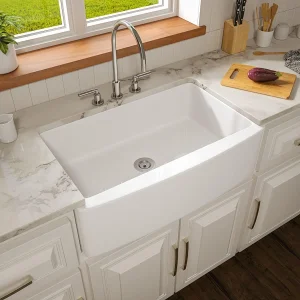
Fired in specialized shuttle kilns at temperatures exceeding 2200°F (1200°C). This process fuses the clay and glaze, creating a glassy surface resistant to deep scratching, staining, and impact damage.
Operating as an authorized exporter of high-end countertop kitchen sinks requires compliance with international regulatory frameworks. Leading Chinese suppliers adhere to strict quality monitoring structures, ensuring that every batch meets rigorous certifications, including ASME A112.19.3/CSA B45.4 for North America (cUPC certification), EN 13310 for the European Union (CE markings), and WaterMark approvals for Australia.
Additionally, Guangzhou Nura Kitchen Co., Ltd. applies the same strict quality assurance frameworks from its electrical manufacturing lines to its integrated kitchen solutions. Their quality control process spans raw material spectral analysis, weld joint pressure testing, PVD coating thickness evaluation, and drop-testing for packaging. This thorough testing guarantees that every sink arrives at its destination in perfect condition, ready for high-use installations.
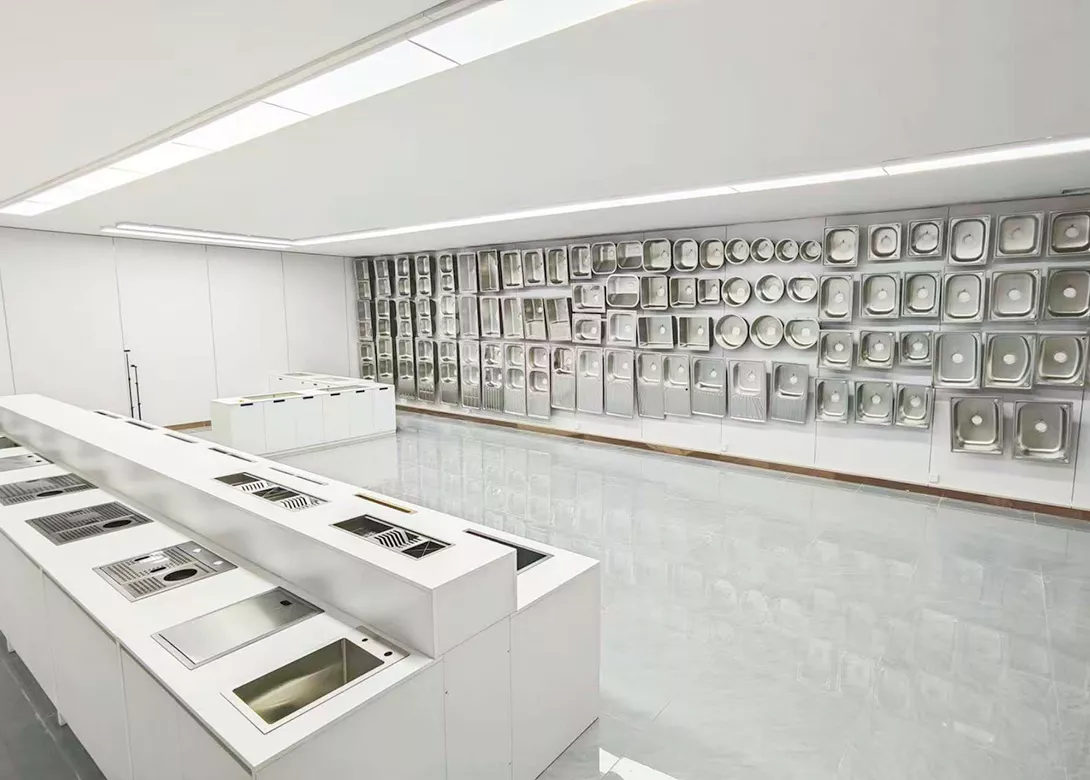
For high-traffic commercial and luxury residential projects, 16-gauge (approximately 1.5mm thick) SUS304 stainless steel is the professional standard. It provides exceptional structural rigidity, minimizes vibration from garbage disposals, and resists denting. 18-gauge (approximately 1.2mm) is highly durable and serves as an excellent option for general residential construction, balancing durability and cost-efficiency. Avoid 20-gauge or thinner materials, as they are prone to deflection under thermal shock and load.
PVD (Physical Vapor Deposition) Nano-coating applies a thin layer of titanium or zirconium nitride compound to the stainless steel surface in a vacuum chamber. This layer provides key benefits: it increases surface hardness, prevents scratches, and creates a hydrophobic barrier that repels water and oils. In commercial settings, this coating prevents mineral scaling and chemical etching, extending the sink's aesthetic life by up to 10-15 years compared to untreated steel.
Yes. Premium products exported from our partner facilities undergo third-party certification checks to ensure compliance with cUPC (IAPMO standard ASME A112.19.3-2008/CSA B45.4-08) and CE EN 13310 requirements. This compliance ensures that plumbing dimensions, drain placement, slope angles, and material composition meet plumbing codes in North America and Europe, simplifying project approvals and installations.
R0 (Zero-Radius) sinks feature sharp, 90-degree corners, offering a bold, modern look favored in industrial designs. However, these tight corners require manual cleaning. R10 sinks feature slightly curved corners with a 10mm radius. This design maintains the clean, modern aesthetic of straight lines while making it easier to wipe away food debris and mineral buildup, combining modern style with daily practicality.
Every high-grade handmade stainless steel sink is equipped with extra-thick, heavy-duty rubber dampening pads applied to the underside and side walls of the basin. Additionally, a non-toxic anti-condensation protective undercoating is sprayed over these pads. This barrier prevents moisture buildup from cold water, protecting surrounding wooden cabinets from rot and mold growth while significantly dampening noise from running water and disposal units.
Our standard Minimum Order Quantity (MOQ) ranges from 50 to 100 units per model, depending on material specifications (stainless steel, quartz composite, or fireclay). Typical OEM production lead times run between 35 to 45 days after deposit confirmation and CAD technical drawing sign-off. For established distributors, we offer custom tooling options for proprietary designs with volume-based tooling rebates.
Composite granite and ceramic fireclay sinks require specialized drop-tested packaging due to their weight. We package each sink using high-density, custom-molded EPS foam inserts that cradle the basin, combined with double-wall corrugated outer cartons rated for export handling. For large commercial shipments, these cartons are palletized and stretch-wrapped to prevent shifting during transit, minimizing the risk of hairline fractures.
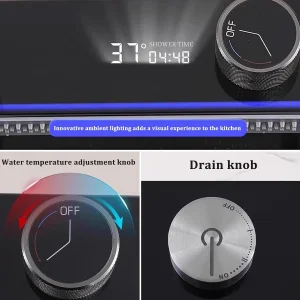
Yes. Working with kitchen appliance innovators like Guangzhou Nura Kitchen Co., Ltd., we can develop integrated culinary workstations. These can feature built-in touch-activated water controls, automated cup washers, integrated LED indicator lighting, and customized mechanical drainage systems, allowing B2B buyers to offer highly advanced, multi-functional kitchen units.
 Nura Kitchen