Top 10 Reasons Prep Sinks Need Colanders and Strainers?

Time:2026-11-21 Author:Henry
0%

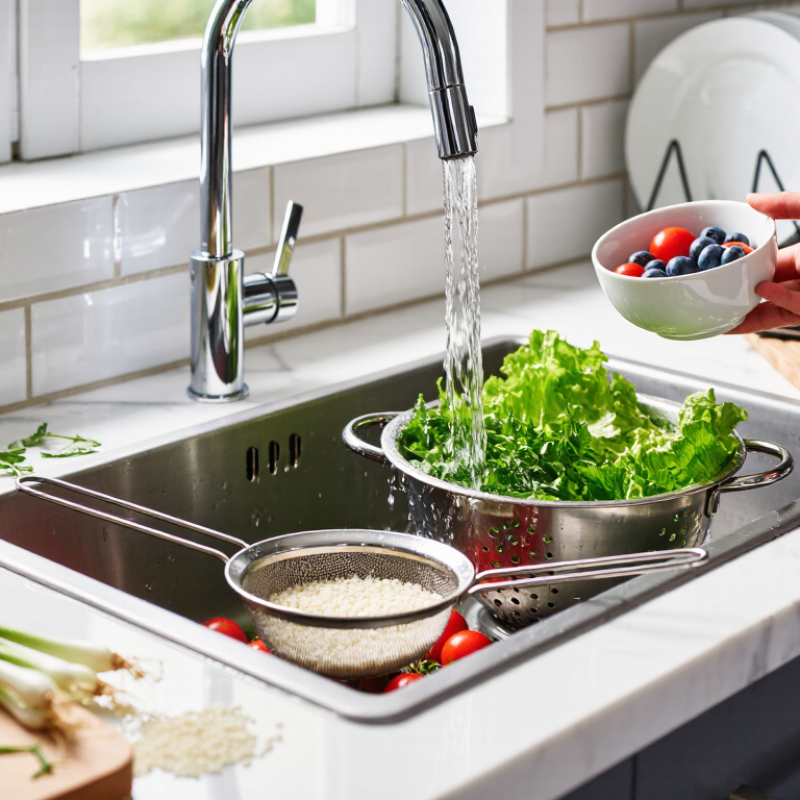
A prep sink handles more than quick rinses. It may hold sandy lettuce, chopped herbs, pasta, or a bowl of berries while dinner is underway. Without a colander or strainer, water pools around ingredients, scraps can slip toward the drain, and the counter gets wet. Small tools make a noticeable difference. They help separate food from water, keep rinsing contained, and make cleanup easier. That is why colanders and strainers are important for prep sinks in busy home kitchens.

The right choice depends on the sink and the task. A wide colander can rest across a basin while you rinse vegetables. A fine-mesh strainer catches smaller items, such as rice or seeds, that larger holes may miss. Fit matters, too: a tool that wobbles or blocks the faucet can turn a simple rinse into a hassle. Not every kitchen needs several options, and a strainer will not fix poor sink organization. I’ve found that the most useful setup is often the one people can grab and clean without thinking. The reasons below explain how these practical tools support safer handling, less mess, and a smoother prep routine—while also showing where their limits deserve a little attention.
Top 10 Reasons Prep Sinks Need Colanders and Strainers?

Prep-Sink Fundamentals: Colanders Drain Solids, While Strainers Catch Finer Particles

A prep sink works best when each tool has a clear job. A colander drains larger solids, such as rinsed lettuce, pasta, or chopped vegetables. Its wide holes let water escape quickly while keeping food contained. Rest it securely over the basin, and leave room beneath it for water to flow. A crowded sink can slow draining, even with a sturdy colander.

Small distinction.

A strainer uses finer mesh to catch particles that a colander misses, such as grit from herbs or small seeds from fruit. Rinse delicate produce gently; pressing it into the mesh can bruise leaves or trap debris. For washing rice or draining tiny pasta, choose mesh fine enough to hold the food but open enough to release water. Very fine mesh is not always better. It can clog quickly and take longer to clean, so match the weave to the task. Check that handles sit steadily on the sink rim, and wash away trapped residue before it dries. The right fit matters, too: a strainer that tips or blocks the drain makes routine prep more awkward.

Food-Safety Context: CDC Estimates 48 Million U.S. Foodborne Illnesses Each Year

A prep sink is a small station with a serious food-safety role. The CDC estimates that 48 million people in the United States get foodborne illnesses each year; about 128,000 are hospitalized and 3,000 die. These figures come from the CDC’s 2011 foodborne-illness estimates, still widely cited as a measure of the burden. A colander helps rinse produce under running water and drain it without leaving it pooled in the basin. A fine strainer can catch scraps before they collect around the drain. Small tools matter.

They do not make food safe by themselves. The FDA Food Code 2022 emphasizes cleaning and sanitizing food-contact surfaces, while the CDC identifies cross-contamination as a food-safety concern. In daily use, that means washing the sink and accessories between tasks, especially after handling raw meat, poultry, or seafood. Keep produce separate, and let washed leaves drain in a clean colander rather than on a wet counter. A rushed rinse is easy to mistake for a complete cleaning. It is not. Colanders and strainers make separation and draining more practical, but the routine around them still matters.

Cold-Prep Control: FDA Food Code Sets TCS Foods at 41°F (5°C) or Below

Top 10 Reasons Prep Sinks Need Colanders and Strainers?

Cold-Prep Control: FDA Food Code Sets TCS Foods at 41°F (5°C) or Below

Cold preparation is a temperature-control task, not just a washing step. The FDA Food Code 2022 sets cold holding for time/temperature control for safety (TCS) foods at 41°F (5°C) or below (§3-501.16). A colander helps drain washed produce quickly, while a strainer keeps small ingredients from sitting in pooled sink water. Neither tool replaces refrigeration or temperature checks.

Use them to handle ingredients in smaller batches. Drain cut tomatoes, leafy greens, or chilled pasta over a clean basin, then move them promptly into covered, refrigerated containers. Keep raw animal foods separate from ready-to-eat ingredients, and sanitize sink surfaces and tools between tasks. A quick probe reading can catch warming that touch alone misses. That extra transfer feels fussy. It can also protect your cold chain.

The stakes are broad: CDC estimates that foodborne diseases cause about 48 million illnesses, 128,000 hospitalizations, and 3,000 deaths in the United States each year (Foodborne Illnesses and Germs, 2011 estimates). Those figures are not specific to prep sinks, but they show why routine controls matter. A strainer can make draining neater; it cannot make food safe by itself. Check temperatures, limit time at room temperature, and follow your local food-safety requirements.

Material Selection: NSF/ANSI 51 Covers Materials Used in Food Equipment

A prep-sink colander handles wet produce, while a strainer catches scraps and protects the drain. Their food-contact surfaces face repeated washing, acidic juices, and abrasion from utensils. NSF/ANSI 51, titled Food Equipment Materials, sets sanitation-related requirements for materials used in food equipment. It is a useful benchmark when specifying sink accessories, but it does not mean every product is automatically certified. Check documentation for the actual material and intended use.

The FDA Food Code 2022 calls for food-contact surfaces to be durable, corrosion-resistant, nonabsorbent, and easily cleanable. In practice, inspect the basket’s rim, welds, and perforations: rough edges can trap residue, and damaged finishes can become harder to clean. Small details matter. CDC estimates from its 2011 foodborne-illness report put the U.S. annual burden at 48 million illnesses, 128,000 hospitalizations, and 3,000 deaths. Those figures concern foodborne illness overall, not sink accessories specifically; they underline why every food-contact step deserves care. A material label alone is not enough. Cleaning frequency, water quality, and wear also shape real-world performance.

Top 10 Reasons Prep Sinks Need Colanders and Strainers? - Material Selection: NSF/ANSI 51 Covers Materials Used in Food Equipment

No. Reason How a Colander or Strainer Helps Material and Design Consideration NSF/ANSI 51 Connection
1 Rinse produce efficiently Perforations let rinse water pass through while keeping fruits and vegetables contained. Choose a durable, nonabsorbent food-contact surface that resists corrosion under its intended conditions. The standard addresses materials and finishes used in food equipment; suitability depends on the material’s intended use.
2 Drain washed ingredients A raised or removable insert allows water to drain away from washed ingredients. Look for a stable design with smooth, cleanable surfaces and no unnecessary crevices. Cleanability and finish are relevant considerations when evaluating food-equipment materials.
3 Separate food from sink debris An insert keeps ingredients off the basin bottom and helps limit contact with residue left in the sink. Use food-contact components that are easy to remove, inspect, and clean. Material suitability should be assessed for the food-contact application rather than assumed from appearance alone.
4 Catch small ingredients A fine strainer can retain small items, such as grains or chopped ingredients, during rinsing or draining. Select an opening size suited to the food being handled, with mesh or perforations that can be thoroughly cleaned. The standard concerns material and finish requirements; it does not prescribe one strainer opening size for every task.
5 Support batch preparation Removable baskets make it easier to rinse and drain separate batches without holding them by hand. Check that handles, rims, and supports are sturdy and do not create hard-to-clean joints. Food-equipment materials are evaluated in relation to their use, construction, and exposure conditions.
6 Reduce standing water around food Drainage helps prevent ingredients from sitting in rinse water collected in the basin. A well-draining design should remain stable and allow water to flow freely through its openings. The standard focuses on materials and finishes, not on guaranteeing a particular drainage rate.
7 Make draining and transfer more convenient A lift-out colander can be moved from the sink to a work surface or cooking vessel with fewer transfers by hand. Consider comfortable, secure grips and edges that can be cleaned without trapping food residue. Material evaluation should account for the equipment’s intended handling and cleaning conditions.
8 Help keep sink workflows organized Separate inserts can provide designated places for washing, draining, or holding ingredients. Choose components that fit securely and can be removed for cleaning and inspection. NSF/ANSI 51 addresses materials used in food equipment; it does not establish a workflow or sink-layout requirement.
9 Withstand repeated washing A reusable insert can support routine prep when it remains intact and can be cleaned between uses. Verify compatibility with the temperatures, detergents, sanitizers, and cleaning methods used at the facility. Material performance should be considered under the equipment’s expected use and cleaning conditions.
10 Make material selection more informed A purpose-built colander or strainer provides a removable food-contact surface designed for rinsing and draining tasks. Review construction, finish, corrosion resistance, cleanability, and documented suitability for the intended food-contact use. NSF/ANSI 51 covers materials and finishes used in food equipment; the standard does not mean every material or product is automatically certified.

Note: NSF/ANSI 51 is a food-equipment materials standard. Check the applicable product documentation and local requirements when selecting food-contact equipment.

Choosing and Maintaining a Colander: Match Mesh, Capacity, and Cleanability to the Task

A colander should suit the food, not just the sink. Fine mesh catches quinoa, small lentils, and herb leaves, but it can hold water and trap pulp. Wider perforations drain pasta and rinsed greens faster, though tiny grains may escape. For prep sinks, check that the rim rests securely over the basin without blocking the faucet or drain.

Capacity matters during real prep. A small basket is easy to lift, but it can crowd a pound of berries or a heap of spinach. Choose enough room to toss food gently, with space for water to move through. Stainless steel handles hot draining well; food-safe plastic is lighter for repeated rinsing. Check joins and handles for smooth edges and sturdy attachment. Small detail, big difference.

Cleanability is easy to overlook. After straining rice or chopped herbs, rinse the basket from both sides, then inspect the rim and handle joints. A soft brush can clear mesh without bending it; harsh scrubbing may damage fine wires. Let the colander dry fully before storage, especially if it nests inside a bowl. The rim is easy to miss during a rushed rinse. Worth checking twice.

Choosing a Colander or Strainer: Mesh Opening Matters

Standard sieve openings get smaller as the mesh designation increases. Use coarser openings for draining pasta and produce, and finer openings when you need to retain smaller particles. Check the product specifications: everyday colanders are not necessarily manufactured to sieve standards.

Nominal sieve openings shown: ASTM E11 standard sieve series. Smaller openings may take longer to drain and can require more careful cleaning.

FAQS

Why use a colander in a prep sink?

It rinses produce under running water and drains it without leaving it pooled in the basin. Leaves drain better.

What does a fine strainer do?

It catches small scraps before they collect near the drain. The sink stays tidier, though the strainer still needs cleaning.

Do colanders and strainers make food safe by themselves?

No. They help with draining and separation, but they do not replace careful cleaning. A rushed rinse is not enough.

Where should washed produce drain?

Let it drain in a clean colander, not on a wet counter. Keep it separate from raw meat, poultry, and seafood.

How can these tools support cold food preparation?

Drain chilled pasta or cut tomatoes in small batches. Move them promptly into covered, refrigerated containers. Keep cold foods at 41°F (5°C) or below.

Can draining tools replace temperature checks?

No. A clean strainer cannot show whether food has warmed. Use a probe thermometer when needed.

What should I inspect on a sink accessory?

Check the rim, welds, and holes for rough edges, damage, or trapped residue. Small details matter.

What materials are easier to maintain?

Choose food-contact surfaces that are durable, corrosion-resistant, nonabsorbent, and easy to clean. Check documentation for the intended use. A label alone is not enough.

Conclusion

Colanders and strainers are essential tools at prep sinks because they separate food from water and help keep preparation organized. Colanders drain larger solids such as washed produce or pasta, while finer strainers catch smaller particles that would pass through wider openings. Understanding why colanders and strainers are important for prep sinks also means recognizing their role in food-safety routines: clean, well-maintained equipment supports careful handling in a context where the CDC estimates that 48 million people in the United States experience foodborne illness each year.

For cold preparation, time and temperature control matter. The FDA Food Code sets 41°F (5°C) or below as the standard for keeping time/temperature control for safety foods cold. Choose food-equipment materials suited to the task, considering NSF/ANSI 51, which addresses materials used in food equipment. When selecting a colander, match its mesh size and capacity to the ingredients, and favor a design that is easy to clean. Regular, thorough cleaning helps prevent food residues from building up and keeps the tool ready for safe, efficient use.

Henry

Henry

Henry is a dedicated marketing professional with a profound expertise in the company's offerings. With years of experience in the industry, he possesses an impressive understanding of the market dynamics and consumer behaviors that drive success. Henry is committed to sharing his insights through......