Choosing a kitchen sink affects daily cleaning, countertop maintenance, cabinet planning, and resale appeal. That is why many homeowners ask, “what is the difference between topmount and undermount sinks?”
A topmount sink rests on the countertop, with a visible rim supporting its weight. It usually installs faster and works with laminate, tile, stone, and solid-surface counters. Its exposed edge can also help contain small spills. However, crumbs may collect around the rim, and the raised border interrupts smooth wiping. An undermount sink attaches beneath the countertop. This creates a continuous surface, allowing water and debris to move directly into the basin. It looks cleaner, but installation demands accurate cutting, strong support, and compatible countertop materials.
The NKBA 2024 Kitchen Trends Report identifies functionality, durability, and easy maintenance as continuing kitchen priorities. Houzz’s 2024 U.S. Kitchen Trends Study also tracks sink, countertop, and fixture decisions as part of broader renovation behavior. These reports do not make one sink style universally superior. They reveal a more useful point: performance depends on the kitchen’s materials and habits.
Kitchen designer Susan Serra, CKD, has described the sink as “the hardest-working appliance in the kitchen.” That observation matters. A busy family may value simple topmount replacement, while a design-focused remodel may prefer undermount cleaning access. Neither choice is perfect. This guide compares ten practical differences, including cost, installation, hygiene, durability, accessibility, and long-term repair risks. Some conclusions may challenge common showroom advice. That is intentional. Real kitchens are rarely ideal.
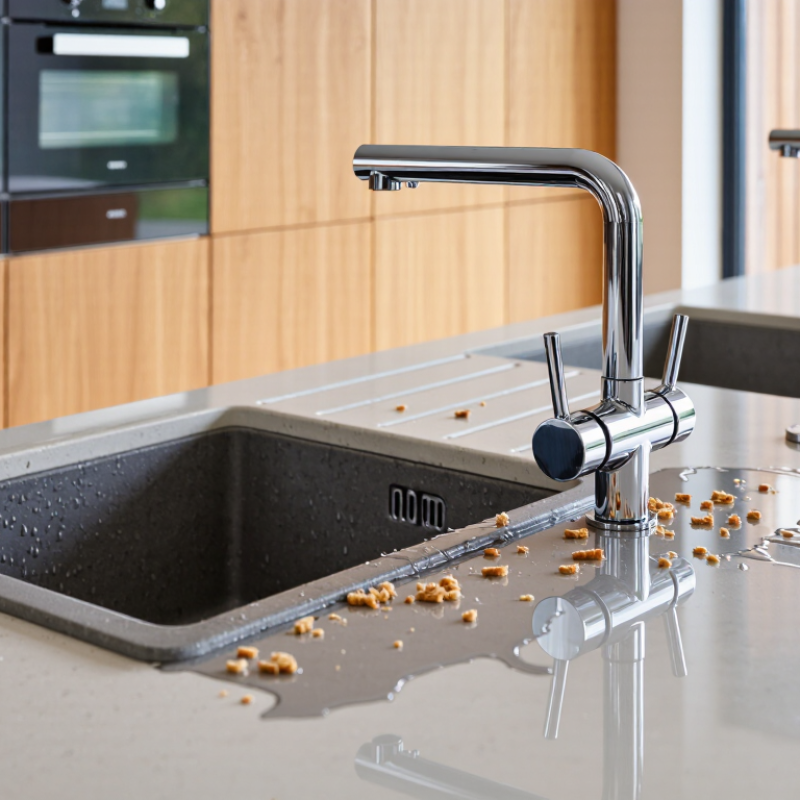
Topmount sinks differ first in their position against the countertop. A topmount sink drops into a cutout, leaving a visible rim above the surface. Installers seal this rim with silicone and secure clips from below. The countertop can often be installed before the sink, which simplifies replacement work. It suits laminate and many budget renovations.
An undermount sink attaches beneath the countertop edge. The fabricator cuts and polishes the opening, then uses clips, brackets, or structural adhesive for support. The countertop must resist moisture, so solid stone, quartz, or another compatible material is usually required. The installation sequence matters: the sink is fixed before the counter reaches the cabinet. Poor support can cause movement, leaks, or a separated bowl. Small errors become obvious.
The visual appeal is clear. Crumbs can be swept directly into an undermount bowl, without crossing a raised rim. Yet maintenance deserves equal attention. The exposed countertop edge needs accurate sealing, especially around wet corners. Houzz’s 2024 U.S. Kitchen Trends Study reported that 76% of renovating homeowners upgraded countertops, showing why sink-to-counter integration matters. The U.S. Environmental Protection Agency also limits WaterSense-labeled kitchen faucets to 1.5 gallons per minute, with a 20% performance requirement over standard models. That figure concerns faucets, not sinks, but it affects everyday sink performance. The cleanest look is not always the easiest. For a replacement project, topmount may be the more practical choice.
A topmount sink drops into a countertop cutout. Its rim remains visible above the surface. Installers seal the rim with silicone and secure clips underneath. Small errors show less.
An undermount sink attaches beneath the countertop edge. Its rim stays hidden, creating a smooth surface. Crumbs can be swept directly into the bowl. Not always easier.
Solid stone, quartz, and compatible solid surfaces usually work well. The exposed edge needs accurate cutting, polishing, and sealing. Laminate may require different construction. Material choice matters.
A topmount sink can often be installed after the countertop. An undermount sink must be supported before the counter reaches the cabinet. Clips, brackets, or structural adhesive may hold it. Poor support can cause movement.
Topmount sinks are usually easier to remove and replace. Their visible rim covers small cutting imperfections. Undermount replacement requires careful access and may disturb the countertop seal. Check access.
An undermount sink offers a continuous wiping path. Water and crumbs move directly into the basin. A topmount rim can collect residue and moisture. That ledge needs regular cleaning.
Topmount installation often costs less because it needs fewer finishing steps. It also works with many budget countertops. Undermount installation may cost more because fabrication and edge finishing require precision. Prices vary.
No. It offers cleaner lines and may make the counter feel larger. A topmount sink can be more practical for replacements and busy kitchens. I may overvalue appearance sometimes. Daily habits should decide.
Choosing between topmount and undermount sinks depends on installation style, countertop design, maintenance needs, and budget. A topmount sink rests on the countertop with a visible rim, making it easier to install and suitable for many countertop materials. An undermount sink is secured beneath the counter, creating a smooth, uninterrupted surface that makes sweeping water and debris into the basin easier. The main answer to “what is the difference between topmount and undermount sinks” lies in how they connect to the countertop and affect daily use.
Topmount sinks are generally more affordable, flexible, and simpler to replace, while undermount sinks often provide a cleaner appearance and better water management when professionally installed. However, undermount models may require stronger countertop materials, precise support, and careful sealing to prevent moisture issues. Both styles can be durable when properly installed and maintained, so the best choice depends on the desired appearance, countertop construction, cleaning habits, installation requirements, and overall project budget.

 Nura Kitchen