How to Protect Handmade Sinks from Damage During Shipping?

Time:2026-10-09 Author:Amelia
0%

Handmade sinks deserve more than ordinary shipping protection. Their thick ceramic walls, uneven rims, glazed surfaces, and attached drains create several vulnerable points. A box may look secure, yet one hard drop can produce a hairline crack beneath the glaze. That damage may remain invisible until installation.

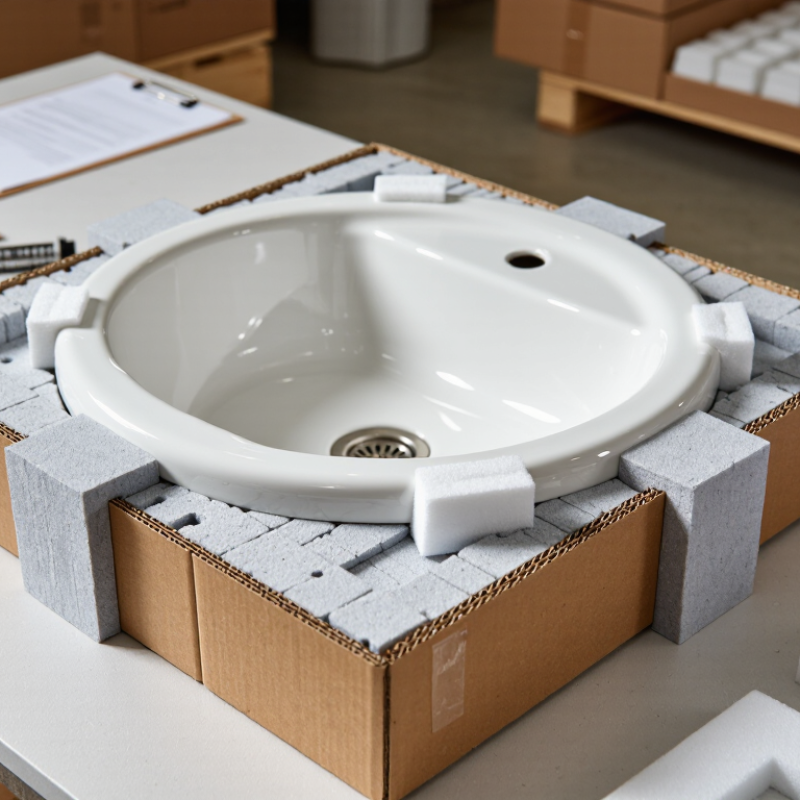
Thomas H. Robinson, a packaging consultant specializing in fragile ceramic products, says, “The safest package controls movement before it tries to absorb impact.” This principle explains why careful protection begins inside the carton. The sink should sit on a custom-cut foam base, not directly on cardboard. Soft foam should separate the rim from the box walls. Additional cushioning must prevent the fixture from shifting during sudden stops, corner impacts, and rough conveyor handling.

Learning how to protect handmade sinks from damage also requires attention to small details. Wrap the sink in a clean, non-abrasive layer before adding cushioning. Protect exposed corners and drain openings with shaped inserts. Use a strong double-wall carton with limited empty space. However, excessive padding can create pressure points. That mistake is easy to make.

A practical shipping test should include gentle shaking, edge handling, and controlled drop checks. Photographs of the packed sink can document each stage before collection. Clear “Fragile” markings may help, but labels cannot replace structural protection. They are only reminders.

Even experienced packers can overlook an uneven rim. That is worth admitting. The best method is not perfect, but it is tested, repeatable, and improved after every delivery.
How to Protect Handmade Sinks from Damage During Shipping?

Assess Handmade Sink Fragility Before Preparing the Shipment

Before preparing a handmade sink for shipment, assess its fragility, not just its weight. Each piece can hide weak points around the drain opening, rim, and corners. Run clean fingers along the surface and inspect it under angled light. Fine hairline cracks may look like glaze variation. They are not harmless. Tap gently with a knuckle and listen for a clear, even tone. A dull spot deserves closer inspection. This simple check has prevented rushed packing decisions in my workshop.

Record the sink’s dimensions, mass, material, and firing or curing condition. A thick stone basin may resist impact, while a thin ceramic wall can fracture from small pressure. Measure wall thickness near the rim and beneath the bowl when access allows. Check mounting holes carefully. They often become stress points. Photograph every side, including existing marks, before wrapping. Good records support honest handling claims and help another person repeat the assessment. Do not rely on appearance alone. I once judged a heavy basin as safer than a lighter one. That assumption was wrong.

Classify the sink as stable, sensitive, or high risk. A sensitive piece needs clearance around every exposed edge. A high-risk piece needs custom supports and a rigid outer crate. Never let foam press directly against a fragile rim. Use firm, shaped support beneath the bowl, with soft cushioning between contact surfaces. Shake-testing should be controlled, not careless. If movement, rattling, or new powder appears, stop and reassess. Packaging is not a cure for hidden damage. Sometimes, delaying shipment for a professional inspection is safer.

How to Protect Handmade Sinks from Damage During Shipping?

Assess Handmade Sink Fragility Before Preparing the Shipment

This pre-shipment assessment uses a practical 1–5 risk scale, where 1 indicates low exposure and 5 indicates high exposure. Handmade ceramic and stone sinks should receive particular attention around corners, drain openings, glazed surfaces, unsupported spans, and internal voids. Higher scores call for stronger edge protection, complete cavity filling, vibration-resistant padding, and a rigid outer carton or crate.

Select Protective Materials for Each Sink Surface and Component

Protective materials should match each sink surface, not simply fill the carton. Global parcel volume reached 161.8 billion shipments in 2022, according to the Pitney Bowes Parcel Shipping Index 2023. More parcels mean more drops, vibration, and compression.

For polished ceramic, use a clean, soft foam sleeve with sealed edges. Avoid loose recycled paper, which can rub against glossy finishes.

Natural stone needs closed-cell foam, corner guards, and a moisture-resistant outer wrap. Do not trap dampness against porous stone. Let the surface breathe before final sealing.

Brushed or coated metal benefits from non-abrasive foam and temporary corrosion-inhibiting paper. Keep drains and faucets separate in small compartments. Their hard edges can scratch the basin during vibration. I still over-pack delicate rims sometimes. That choice needs review.

Tips:

Place a foam ring around the rim before adding the first carton layer. Leave a small compression gap around the sink. Test the packed unit using ISTA 3A procedures or an equivalent distribution test. Check for shifting after each drop sequence. A double-wall carton helps, but it cannot repair poor internal fit.

According to the U.S. Environmental Protection Agency’s 2018 Facts and Figures report, containers and packaging represented 28.1% of municipal solid waste generation. Choose only the material thickness the surface requires. Do not improvise. Photograph every packing stage, record material types, and inspect corners, drain openings, and glaze edges before dispatch.

Secure the Sink Against Movement Inside a Properly Sized Crate

A handmade sink needs a crate that fits closely without squeezing its walls. Measure the sink after curing, including rims, drains, and protective coverings. Add space for cushioning, but avoid creating a large empty cavity. Oversized crates let the sink gain dangerous momentum during handling.

In my packing work, I place the sink on a firm, padded base. I use shaped foam blocks to support strong areas, such as the underside and outer rim. Fragile corners need separate protection. The drain opening should never carry the crate’s weight. Side blocks prevent sliding, while top padding limits vertical movement. Nothing should press directly against a finished surface.

Test the packed crate before dispatch. Gently rock it and listen for shifting. Lift one end slightly, then check every brace and fastener. The sink should stay still. I once trusted thick padding without adding side restraints, and the sink still moved inside the crate. That mistake changed my packing process. I now mark the crate’s upright position and photograph the interior before closing it. Moisture-resistant materials also help when storage areas are cold or damp. Leave no loose tools, scraps, or hardware inside. Small objects can become impact points. Inspect the crate again after sealing, because a secure fit depends on details that are easy to overlook.

Add Moisture, Impact, and Vibration Protection During Packing

How to Protect Handmade Sinks from Damage During Shipping?

Handmade sinks need protection from moisture before they meet impact. Wood crates can trap condensation against porous stone, concrete, or ceramic surfaces. The International Safe Transit Association’s ISTA 3A procedure includes atmospheric conditioning, compression, vibration, and drop testing. Use that sequence as a practical packing reference. Wrap the dry sink in breathable, water-resistant film. Add desiccant packs inside the crate, but keep them away from finished surfaces. A moisture indicator card can reveal unexpected humidity during transit.

Impact protection must isolate corners, drains, and exposed edges. Use dense foam blocks with at least 50 mm clearance around fragile points. Do not let the sink touch the crate walls. Fill empty spaces with fitted cushioning, not loose paper. The U.S. Department of Transportation’s Freight Facts and Figures reports that trucks carry most domestic freight by tonnage. That means repeated loading, braking, and road vibration deserve serious attention. Add a floating inner frame and secure it with adjustable straps. Avoid overtightening. Handmade pieces can crack under pressure before shipment even begins.

Vibration often exposes weak packing. Test a finished crate with a controlled shake, then inspect joints and glazing. This is not a perfect laboratory test. It still reveals movement. My practical mistake was trusting thick foam alone; the sink shifted beneath it. Record packed weight, crate dimensions, photos, and moisture readings. Those records support consistent quality control and make damage investigations more reliable.

Inspect, Label, and Document the Package Before Handing It to the Carrier

How to Protect Handmade Sinks from Damage During Shipping?

A handmade sink deserves a careful pre-shipment inspection. Check the rim, basin, drain opening, glaze, and underside under bright light. Photograph every surface, including the packed corners and shock-absorbing materials. Record the sink’s weight, box dimensions, and visible condition. These details create reliable evidence before the carrier receives it.

The Pitney Bowes Parcel Shipping Index 2024 reported about 161 billion parcels worldwide in 2023. More parcels mean more handling points and greater pressure on packaging systems. Mark the carton with “Fragile” and “This Side Up,” but do not rely on labels alone. Place the sink inside a rigid inner box, secure empty spaces, and keep the basin away from all carton walls. I once considered a small gap harmless. It was not. A corner impact can travel through that space and chip a vulnerable rim.

Tips: Use close-up photos with timestamps. Photograph the shipping label separately. Ask the carrier for an acceptance receipt showing the package condition. Keep measurements and images together for at least the claim period. If the carton already has a crushed edge, stop and repack it. A second inspection may feel repetitive, but handmade surfaces often hide hairline damage. Test the carton gently for movement before handing it over. No movement is better. Test records should also note who inspected the package and when.

How to Protect Handmade Sinks from Damage During Shipping? - Inspect, Label, and Document the Package Before Handing It to the Carrier

Inspection Stage What to Check Recommended Protection Label or Marking Required Documentation Acceptance Criteria Before Handover
1. Sink Surface Inspect the basin, rim, corners, drain opening, glaze, coating, and visible edges under bright light. Cover the finished surface with clean, non-abrasive protective material. Prevent direct contact with hard packing components. Apply a visible “Fragile” marking to the outer package rather than directly to the sink surface. Record clear photographs of all sides, the rim, basin, corners, and drain area. Pass: No chips, cracks, scratches, stains, or finish defects are visible.
2. Structural Condition Check for hairline cracks, movement, weak joints, sharp projections, and damage around mounting or drainage points. Use shaped cushioning around corners and edges. Keep heavy accessories separate from the sink body. Mark the package with “Handle With Care” and indicate the correct upright orientation when applicable. Complete a condition checklist with the inspection date, inspector initials, and package reference number. Pass: The sink is stable, intact, and free from loose or vulnerable components.
3. Internal Cushioning Verify that the sink cannot shift, rattle, or touch the inner walls of the shipping box. Fill open spaces with resilient cushioning and use separate protection for the rim, corners, and underside. Place handling labels on at least two adjacent sides so they remain visible during movement. Photograph the cushioning before the package is closed, including corner and top protection. Pass: No measurable movement is detected during gentle, controlled repositioning.
4. Outer Packaging Inspect the carton or crate for suitable strength, clean surfaces, intact seams, and enough clearance around the product. Use a rigid outer container with reinforced corners and secure closure. Do not allow the sink to carry the weight of other items. Display the destination address, return address, package reference, weight, and orientation arrows where relevant. Record the final package dimensions, gross weight, closure method, and package condition. Pass: The container is closed securely with no punctures, crushed panels, or exposed gaps.
5. Moisture Protection Check that the package is protected from rain, condensation, and contact with wet surfaces during handling. Use a sealed inner layer or moisture-resistant wrap while avoiding materials that can trap moisture against a fresh finish. Add a “Keep Dry” marking when the packaging or finish is sensitive to moisture. Photograph the moisture barrier and note whether the package was inspected in dry conditions. Pass: The protective layer is intact and the package is dry before carrier collection.
6. Label Verification Confirm that labels are legible, securely attached, consistent with the shipping record, and visible on the correct package. Place labels on a flat, clean surface away from seams, handles, and areas likely to be covered by tape. Use “Fragile,” “Handle With Care,” “Keep Dry,” and orientation arrows only when applicable and truthful. Save a photograph showing the complete label set and package reference together. Pass: All address, handling, and identification information is readable and matches the shipping documents.
7. Final Package Evidence Review the complete package from every side and check for visible damage before transfer to the carrier. Keep the package upright and protected from impact until it is accepted by the carrier. Ensure handling markings remain unobstructed after sealing and strapping. Store time-stamped photos, the checklist, package measurements, weight, and handover receipt. Pass: The package condition is fully documented and no unresolved issue remains.
8. Carrier Handover Inspect the package again at collection and note any new dents, tears, wet areas, or handling concerns. Request an exception note or refuse handover for serious, visible damage until the condition is documented. Keep the shipping label and handling markings visible during collection and acceptance. Obtain a receipt or electronic confirmation showing the handover date, time, package reference, and visible condition. Pass: The carrier receives an intact package and the handover record is retained.
Final release rule: Do not hand the package to the carrier until the sink condition, protective materials, labels, package exterior, measurements, weight, and handover evidence have all been checked and recorded.

FAQS

How should I inspect a handmade sink before shipment?

Check the rim, drain opening, corners, glaze, and underside under angled light. Run clean fingers across the surface. Listen for a clear, even tone after a gentle knuckle tap. A dull sound may reveal hidden damage.

Which measurements and records should I collect?

Record the sink’s dimensions, weight, material, wall thickness, and firing or curing condition. Photograph every side, existing mark, drain opening, and mounting hole. Keep these records together. Do not trust appearance alone.

How can I classify the sink’s shipping risk?

Classify it as stable, sensitive, or high risk. Thin ceramic walls and mounting holes need extra attention. A high-risk sink requires shaped supports and a rigid outer crate. Heavy does not always mean safer.

What protective materials suit different sink surfaces?

Use soft, clean foam for polished ceramic. Use closed-cell foam and corner guards for natural stone. Keep moisture away from porous surfaces. Use non-abrasive foam for coated or brushed metal. Material choice matters.

How should I protect the rim and basin?

Place a foam ring around the rim before adding the first carton layer. Support the bowl from underneath with firm, shaped material. Add soft cushioning at contact points. Leave a small compression gap. Foam must not press directly on fragile edges.

How should I prevent fittings from causing damage?

Pack drains and faucets in separate small compartments. Hard edges can scratch the basin during vibration. Keep every accessory away from the sink surface. A loose fitting can become a sharp projectile inside the box.

How should I test the packed sink before handover?

Gently check the carton for movement, rattling, or new powder. Stop if anything shifts. Use a recognized distribution test when available. Inspect the package after each drop sequence. A sturdy carton cannot fix poor internal fit.

What should I document before giving the package to a carrier?

Photograph the sink, cushioning, packed corners, carton condition, and shipping label. Record the package weight, dimensions, inspection time, and inspector. Mark the carton as fragile and keep it upright. Labels help, but they are not protection. Obtain an acceptance receipt showing the package condition.

Conclusion

Learning how to protect handmade sinks from damage begins with assessing their fragility before shipment. Check the sink’s material, shape, finish, edges, basin, drain opening, and any attached components to identify areas that need extra support. Choose protective materials according to each surface, using soft wrapping for finished areas, cushioning for corners, and secure coverings for fittings or removable parts. The sink should then be positioned in a properly sized crate or reinforced box, with strong internal supports that prevent shifting without placing pressure on delicate surfaces.

Additional protection should address moisture, impact, and vibration during transportation. Use sealed moisture barriers where appropriate, layered cushioning, and shock-absorbing padding around the sink and crate walls. Before handing the package to the carrier, inspect every part of the packing, confirm that the sink cannot move, and photograph the finished package for documentation. Clear handling labels and accurate shipping information can also help reduce avoidable risks throughout delivery.

Amelia

Amelia

Amelia is a seasoned marketing professional with a wealth of expertise in our company’s core offerings. With an unwavering passion for driving growth and innovation, she plays a pivotal role in shaping our marketing strategies and enhancing brand visibility. A key aspect of her responsibilities......