Farmhouse sinks have moved from traditional country kitchens into contemporary homes. Their broad basins create a practical workspace for washing roasting pans, vegetables, and oversized cookware. The exposed front also adds a strong visual feature beneath the countertop. This article examines why farmhouse sinks are trending in kitchen design. The answer involves function, craftsmanship, nostalgia, and changing homeowner priorities. Practicality matters.
Renovation professionals often recommend comparing sink materials before choosing a style. Fireclay provides a smooth, bright surface and suits classic interiors. Stainless steel offers lighter weight and easier resistance to impact. Composite models can provide color variety and modern durability. These differences affect cleaning routines, cabinet support, and long-term maintenance. Installation also requires careful planning. Farmhouse sinks are often deeper and heavier than standard undermount models. Cabinet modifications may be necessary, especially in older kitchens. Accurate measurements remain essential.
The style connects emotional comfort with daily convenience. A white apron front can soften dark cabinetry and warm metal hardware. Yet popularity does not make every farmhouse sink suitable for every household. Heavy dishes may cause splashing or discomfort for shorter users. Glazed surfaces can also show chips, stains, or abrasive cleaning marks over time. That tension matters. A reliable design decision should consider cooking habits, counter height, material quality, and installation expertise. Rather than treating the farmhouse sink as a guaranteed upgrade, homeowners should view it as a purposeful design choice. Its appeal is real, but its weaknesses deserve equal attention.
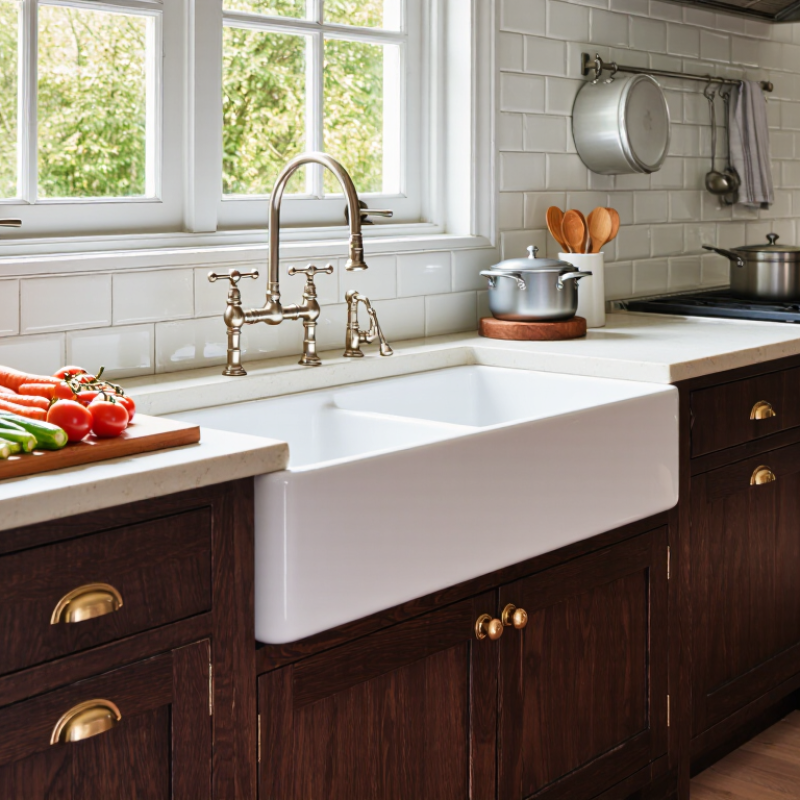
A farmhouse sink is a deep kitchen basin with a visible front panel, often called an apron front. Unlike a traditional sink, its front edge extends beyond the countertop. This design developed from working kitchens, where people washed large pots, vegetables, and household tools. Today, it brings that practical shape into modern homes.
Most farmhouse sinks offer generous space and a comfortable washing position. A wide basin can hold baking trays without awkward balancing. The exposed front may also reduce contact with the countertop edge. In my experience, that matters during long food-preparation sessions. Still, the sink is not automatically easier for everyone. Its depth can make a shorter user lean forward.
Common materials include fireclay, stainless steel, cast iron, and composite stone. Each option behaves differently. Fireclay has a smooth, solid surface but may chip after a hard impact. Stainless steel is lighter and easier to handle, although water spots can show. Cast iron feels substantial, but its weight requires proper cabinet support. Installation should be planned with accurate measurements and professional advice. Cabinet changes can become expensive when overlooked. I once underestimated the clearance needed for a deep basin, and the cabinet doors became inconvenient to use. That small mistake changed how I evaluate sink layouts. A farmhouse sink is attractive, but its proportions, maintenance needs, and installation demands deserve equal attention.
Farmhouse sinks are trending because their design is both visible and practical. The National Kitchen & Bath Association’s 2024 Kitchen Trends Report surveyed more than 500 industry professionals. It identifies durable materials, improved storage, and multifunctional work areas as major kitchen priorities. A farmhouse sink supports these priorities with a forward-facing apron and generous basin depth.
The apron front creates a strong architectural detail beneath the countertop. It also reduces the visual barrier between the user and the basin. This can feel more comfortable during long food-preparation tasks. Fireclay, stainless steel, and composite stone offer different experiences. Fireclay provides a smooth, traditional surface. Stainless steel is lighter and resists sudden temperature changes. Composite stone can create a quieter, heavier feel.
Size matters more than appearance. A 30-to-36-inch basin can hold large pans, cutting boards, and baking trays. However, deep bowls may strain shorter users. That detail is often overlooked. The 2024 Houzz U.S. Kitchen Trends Study found that 76% of renovating homeowners upgraded major kitchen features, showing strong demand for functional improvements, not decoration alone. Single-bowl models suit large cookware, while double-bowl designs support washing and rinsing. A built-in ledge can add a colander or cutting board, but it reduces usable width. Measure cabinet depth, counter height, plumbing space, and daily habits before choosing. Looks can mislead.
| Design Dimension | Typical Farmhouse Sink Feature | Practical Benefit | Design Consideration |
|---|---|---|---|
| Front Apron | The front panel remains visible after installation. | Creates a strong focal point and supports traditional, rustic, and modern kitchen styles. | The cabinet must be designed or modified to accommodate the exposed apron. |
| Large Basin | Many models use a broad, deep single basin, although double-basin versions are also available. | Provides room for washing large cookware, baking trays, and oversized serving dishes. | A deep basin may require users to bend farther when washing dishes. |
| Common Materials | Fireclay, stainless steel, enameled cast iron, copper, and composite materials are widely used. | Offers flexibility in appearance, weight, durability, and maintenance requirements. | Material choice affects cabinet support, cleaning method, scratch resistance, and price. |
| Installation Style | Usually installed as an undermount or apron-front sink beneath or level with the countertop. | The countertop edge can be wiped directly into the basin, reducing raised rims around the sink. | Installation should be planned with the countertop fabricator and cabinet installer. |
| Typical Width Range | Common residential widths are approximately 24 to 36 inches, with other sizes available. | Supports both compact kitchen layouts and larger work zones. | The sink size must match the cabinet opening and available counter space. |
| Visual Character | Clean lines, exposed fronts, rounded corners, or textured finishes are common design choices. | Adds architectural interest and makes the sink a visible part of the kitchen design. | The finish should coordinate with cabinet hardware, faucets, countertops, and backsplash materials. |
| Daily Function | The forward-facing design can position the basin closer to the user than some conventional sink layouts. | Can make food preparation and dishwashing feel more accessible and comfortable. | Ergonomic comfort depends on sink depth, counter height, user height, and installation accuracy. |
| Maintenance | Cleaning requirements vary by material; nonabrasive cleaners are commonly recommended for finished surfaces. | Routine cleaning helps preserve the finish and reduces buildup around the basin. | Avoid harsh chemicals or abrasive pads unless the material manufacturer specifically permits them. |
| Why It Is Trending | Combines a recognizable traditional silhouette with contemporary materials, colors, and hardware. | Appeals to homeowners seeking both visual impact and practical washing capacity. | The style should be selected as part of the complete kitchen plan rather than as an isolated feature. |
Farmhouse sinks are trending because they combine practical capacity with a strong visual presence. Their deep basins handle tall pots, baking trays, and bulky cookware more comfortably than many standard sinks. The exposed front creates a warm, handmade feeling that suits modern, rustic, and transitional kitchens. It also gives the sink a furniture-like role instead of hiding it beneath the counter. It feels substantial. In real kitchen planning, that visibility can make daily washing feel more intentional, although it may show splashes and scratches more clearly.
Tips: Measure the cabinet opening before choosing a sink. Confirm that the base cabinet can support its weight, especially with a heavy ceramic model. A slightly forward installation may protect your back, but it can increase water drips on nearby flooring. Choose a surface that matches your habits, not only your preferred style. Matte finishes can hide marks better, while smooth materials are often easier to clean.
The trend also reflects a desire for kitchens that feel personal and lived-in. A farmhouse sink can soften sharp cabinetry and add a tactile focal point near a window. However, it is not automatically the best choice for every household. Deep basins may require bending, and fragile surfaces need careful cleaning products. I once underestimated how quickly a pale sink could reveal coffee stains. That small detail matters. Good design leaves room for daily mess, not just attractive photographs.
Farmhouse sinks are trending because their deep basins combine practical cleaning space with a warm, handcrafted appearance. Materials strongly affect their performance. Fireclay offers a smooth, bright surface and resists stains, but sharp impacts can cause chips. Stainless steel is lighter and easier to maintain, although it may show scratches and water spots. Cast iron feels solid and quiet, yet its weight requires serious cabinet support.
Size matters more than appearance alone. A 30-inch sink suits many standard kitchens, while a 36-inch model provides extra room for baking trays and large cookware. Measure the cabinet opening, countertop depth, and nearby doors before ordering. A wide basin can reduce valuable counter space. I once assumed bigger meant better, but the surrounding work area felt cramped.
Tips: Choose the material according to your cooking habits. Confirm the sink’s interior depth, because very deep bowls can strain your back. For installation, an apron-front sink usually needs a modified cabinet and reinforced base. Undermount installation creates a clean countertop edge, but precise cutting is essential. Plumbing may also need adjustment. Use a qualified installer when the sink is heavy or the countertop is stone. Minor planning errors can become expensive repairs.
Materials, Sizes, and Installation Options
Fireclay offers a smooth, nonporous surface, stainless steel is lightweight and durable, and cast iron with enamel provides substantial weight and a glossy finish.
Nominal widths of 30, 33, and 36 inches are widely used in residential kitchen layouts. Cabinet width and the required cutout should always be checked before purchase.
Farmhouse sinks are commonly installed as apron-front sinks. Depending on the model and countertop, they may use undermount, flush-mount, or top-mount installation methods.
The chart shows typical nominal sink widths used in residential farmhouse-sink specifications. Actual exterior dimensions and cabinet requirements vary by sink design.
Why Are Farmhouse Sinks Trending in Kitchen Design?
Farmhouse sinks are trending because they combine practical capacity with a warm, handcrafted appearance. Their exposed front creates a strong visual anchor beneath the countertop. The deep basin handles roasting pans, tall pots, and stacks of dinner plates. Large cookware fits comfortably. In renovation projects, this extra space often makes daily cleanup less awkward. The broad front edge can also reduce bending while washing heavy items. However, comfort depends on the sink’s height and the user’s posture.
The main limitation is installation. A farmhouse sink may require a reinforced cabinet and careful countertop measurements. Older cabinets often need modification. The sink can be extremely heavy, especially in ceramic or stone. Its deep bowl may also encourage water splashing onto nearby surfaces. Scratches and stains can become noticeable on some finishes. I have seen homeowners focus on appearance, then regret the difficult cleaning routine. The exposed front needs regular wiping, particularly in busy homes with children.
Tips: Measure the cabinet opening before choosing a sink. Confirm the cabinet can support the filled weight. Ask a qualified installer to inspect plumbing access and countertop clearance. Choose a basin depth that suits your height. Keep a small drying mat nearby. It protects the counter, though it may interrupt the clean farmhouse look. Check care instructions carefully, because attractive finishes are not always low-maintenance.
It is a deep kitchen basin with a visible front panel. The front extends beyond the countertop. Practical and distinctive.
Its wide basin holds large pots, baking trays, vegetables, and cutting boards. The forward-facing front can make washing feel more comfortable.
Not always. A very deep basin may make shorter users lean forward. Check the interior depth before buying.
Common options include fireclay, stainless steel, cast iron, and composite stone. Each material has different weight, maintenance, and durability needs.
Fireclay has a smooth surface and resists stains, but hard impacts may cause chips. Stainless steel is lighter and handles temperature changes well. Water spots can appear.
A 30-inch sink suits many kitchens. A 36-inch model offers more room for large cookware. Bigger is not always better.
Measure the cabinet opening, counter depth, plumbing space, and nearby doors. Also check the sink’s interior depth. Small errors become expensive.
Usually, yes. The cabinet may need modification and a reinforced base. Heavy sinks require strong support and careful planning.
Single-bowl sinks hold large cookware more easily. Double-bowl models separate washing and rinsing. A built-in ledge adds accessories but reduces usable width.
Fireclay may chip, stainless steel may show scratches, and cast iron needs strong support. Clean spills promptly. Appearance can hide practical problems.
A farmhouse sink is a deep, wide kitchen basin with a visible front panel, also known as an apron front. Its spacious bowl and distinctive design make it both a practical work area and a strong visual feature. Key design elements include a broad front, generous depth, simple lines, and compatibility with various cabinet styles, from traditional to modern. The keyword “why farmhouse sinks are trending in kitchen design” reflects their growing appeal: they combine character, convenience, and a welcoming appearance that suits today’s open and multifunctional kitchens.
Farmhouse sinks are available in materials such as ceramic, fireclay, stainless steel, and composite, with sizes and installation methods to fit different layouts. Their main advantages include easier handling of large cookware, an attractive focal point, and flexible style options. However, they may require specialized cabinetry, careful support, regular maintenance, and more counter space. Considering these benefits and limitations helps homeowners choose a sink that fits both their kitchen design and daily routines.

Nura Kitchen