7 Tips for Choosing a Sink for Heavy Daily Use

Time:2026-09-19 Author:Charlotte
0%

Choosing a sink for intense daily use is less about showroom appearance and more about surviving repeated impact, heat, stains, and rushed cleaning. A family kitchen may handle boiling pots, sharp utensils, muddy vegetables, and heavy cookware every day. The wrong basin can reveal scratches, weak mounting, or poor drainage within months. That is why learning how to select a sink for heavy daily use requires practical testing, not only attractive photographs.

Industry research supports this careful approach. The 2024 Houzz U.S. Kitchen Trends Study identifies sinks as a common part of kitchen renovations, showing how frequently homeowners reassess this fixture during upgrades. The National Kitchen and Bath Association also emphasizes durable materials, easier maintenance, and functional workstation layouts in its kitchen design research. These priorities matter when a sink becomes the busiest surface in the room. It should fit the cabinet, accept large cookware, drain efficiently, and remain comfortable during long cleaning sessions.

Small details matter.

A 16-gauge stainless-steel basin may resist dents better than thinner alternatives, while a deep fireclay sink can offer strong heat and stain resistance. However, every material has weaknesses. Stainless steel can show water marks, fireclay may chip at exposed edges, and composite surfaces can vary between manufacturers. I have found that attractive specifications sometimes hide installation limits or difficult cleaning habits. Check the manufacturer’s technical sheet, warranty terms, sound insulation, and recommended care instructions. The EPA’s WaterSense guidance also reminds buyers that efficient faucets can reduce water use without sacrificing everyday performance. A reliable choice balances durability, ergonomics, maintenance, and verified product information.
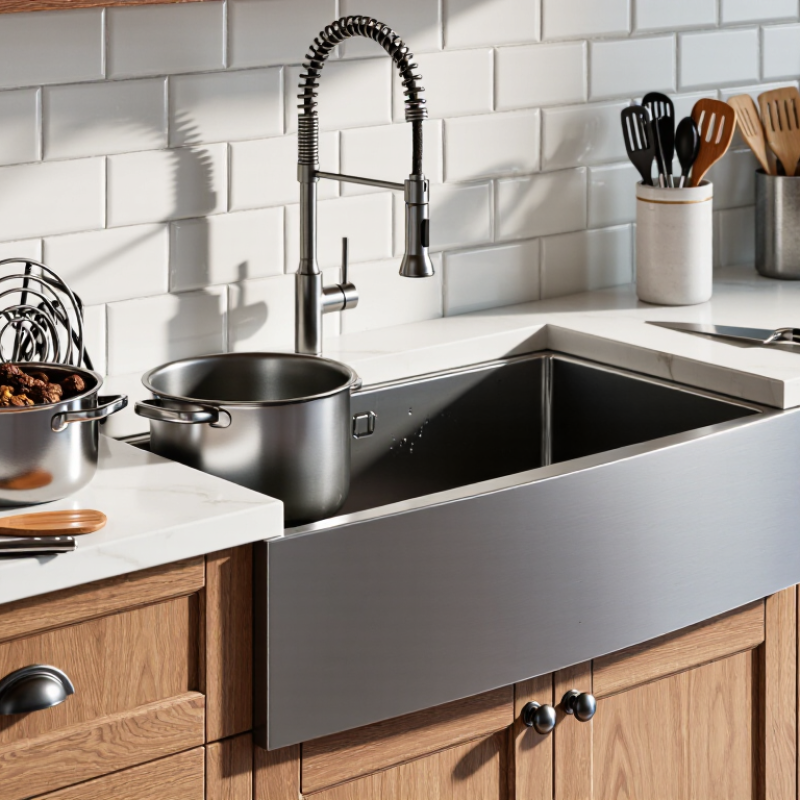
7 Tips for Choosing a Sink for Heavy Daily Use

Assess Your Household’s Daily Sink Demands

A busy sink should match your household’s real daily rhythm, not an idealized kitchen routine.

Count how many people use it, and note when tasks overlap. Breakfast dishes, packed lunches, pet bowls, and evening cooking can quickly create bottlenecks. Peak demand matters most.

Measure your largest items before choosing a basin. A deep, wide bowl may hold a roasting tray, but it can strain shorter users. Two bowls support washing and rinsing together, although each section may feel cramped.

A single bowl often suits large cookware better. I once chose depth over reach, and cleaning the bottom became uncomfortable.

Consider the sink’s working conditions.

Frequent heavy pans require a durable, easy-clean surface and a properly supported installation. Check the cabinet structure, countertop opening, and plumbing space before ordering. A high-arc faucet helps with tall pots, but excessive height can increase splashing. Use a pull-out spray head if rinsing corners is a daily task. Choose controls that wet hands can operate safely.

Households with children, older adults, or limited mobility need reachable edges and manageable depth. Daily maintenance also deserves attention. Tight corners collect food debris. A convenient drain position can reduce standing water, but it may interfere with stored plumbing. These details are easy to overlook.

Your own routine may expose a better choice after a week of observation.

Choose Durable Materials for Frequent Use

For a sink facing heavy daily use, material matters more than appearance. The 2024 Houzz U.S. Kitchen Trends Study surveyed more than 1,300 homeowners about renovation choices. Its findings repeatedly connect kitchen upgrades with durability, easy maintenance, and long service life. That matches what installers see: a sink may handle hot pans, sharp utensils, abrasive cleaners, and constant water exposure.

Stainless steel remains a practical choice for busy kitchens. Choose a thicker 16-gauge bowl when possible, because lower gauge numbers indicate thicker steel. Look for a deep basin, tight corner welding, and strong sound insulation underneath. ASTM A240 covers stainless steel sheet used in corrosion-resistant applications, while ASTM A967 addresses chemical passivation. These standards do not guarantee perfect workmanship, but they offer useful checkpoints. Scratches will appear.

Fireclay provides a solid, smooth surface and tolerates heat well. However, its glazed finish can chip when heavy cookware lands on an exposed edge. Granite composite resists scratches and absorbs less sound, yet dark colors may reveal mineral deposits more clearly. The National Kitchen & Bath Association’s 2024 Design Trends Report also identifies low-maintenance surfaces as an important homeowner preference. I would still inspect the underside, drain opening, and mounting hardware before buying. Online photographs rarely show those weak points. A beautiful sink can become irritating when its corners trap food every night.

Compare Sink Sizes, Depths, and Configurations

Choosing a sink for heavy daily use starts with the cabinet, not the basin alone. Measure the opening, plumbing space, and countertop depth before shopping. A 30-to-33-inch basin often suits busy kitchens, while a smaller cabinet may need a 24-inch model . More width helps with roasting pans, but it can reduce useful counter space. I once favored maximum capacity and regretted losing a clear prep area.

Depth changes comfort and storage. A basin around 8 to 10 inches deep usually holds large cookware without constant splashing. Deeper models can hide dirty dishes, yet they may strain your back during long washing sessions. Check the user’s height and the installation height. Fill the basin with a large pot if possible. That simple test reveals reach problems better than a product photograph.

Configuration affects daily workflow. A single bowl gives uninterrupted space for baking trays and stockpots. A divided bowl supports rinsing and draining, but each side may feel cramped. A low divider offers flexibility, though water can cross the center. Consider drain placement, faucet clearance, and whether an accessory ledge blocks handles. Stainless steel and composite materials can both perform well, but thickness, finish, and installation quality matter. My own measurements were not perfect; plumbing connections shifted the final position by several centimeters. Recheck them before cutting.

Evaluate Cleaning, Maintenance, and Hygiene Needs

Tip 1: Choose a surface that tolerates repeated scrubbing. Stainless steel, glazed ceramic, and solid-surface sinks can handle busy routines when properly maintained. Avoid deep scratches and rough textures, which can trap food particles.

Tip 2: Inspect the bowl’s corners. Tight corners look modern, but they collect grease and crumbs. A gently curved basin is usually faster to wipe clean. Tip 3: Check the drain area carefully. A well-shaped slope helps water and residue move toward the drain, reducing stagnant puddles. Small details matter.

Tip 4: Consider drying time. A sink that stays wet for hours may develop unpleasant odors and encourage microbial growth. Good ventilation helps, but the sink should also drain efficiently. Tip 5: Examine seams, joints, and surrounding edges. These areas often receive less attention during cleaning. I once underestimated a narrow rim; it became the dirtiest part of the installation. Tip 6: Match the sink to your cleaning habits. If you use strong cleaners frequently, confirm that the finish can tolerate them. More chemical strength does not always mean better hygiene. Tip 7: Test daily comfort before buying. Run water, place a heavy pan inside, and imagine wiping the basin after dinner. A sink can be technically durable yet frustrating to maintain. Choose practical access over appearance alone.

7 Tips for Choosing a Sink for Heavy Daily Use

Evaluate cleaning, maintenance, and hygiene needs before selecting a sink material.

The normalized 1–10 index compares common sink materials by smoothness, resistance to staining and scratching, cleaning effort, and hygiene suitability. Higher scores indicate easier maintenance for frequent daily use; actual performance also depends on installation, water quality, and cleaning practices.

Check Installation Requirements and Long-Term Value

A sink for heavy daily use must fit the room before it fits your taste. Measure the cabinet opening, countertop cutout, bowl depth, and plumbing position. A deep bowl can improve washing comfort, but it may collide with the drain trap or reduce storage below. Undermount models also need a solid countertop and careful sealing around the rim. Ask the installer to confirm support, waste connections, faucet-hole spacing, and disposal clearance. Small errors become expensive repairs.

Installation quality shapes long-term value. The U.S. Environmental Protection Agency reports that WaterSense-labeled faucets use no more than 1.5 gallons per minute, up to 30% less than standard models. That can save about 700 gallons per household each year. The sink itself does not create those savings, but compatible fittings can. Check whether replacement parts remain available. A repairable strainer or faucet often costs less than replacing an entire fixture.

The 2024 Cost vs. Value Report from Zonda estimates a 96.1% national cost recoup for a minor kitchen remodel. That figure does not guarantee a sink upgrade will pay back equally. Still, it highlights the value of practical improvements. Choose corrosion-resistant material, rounded corners, and a finish that hides daily marks. Sound-deadening pads help with clattering pans. I once underestimated cabinet clearance, and the deeper basin reduced usable storage. Measure twice. A beautiful sink can still be the wrong sink.

FAQS

Which sink material suits a kitchen with heavy daily use?

Stainless steel is practical for hot pans, sharp utensils, cleaners, and constant water. Choose a thicker 16-gauge bowl when possible. Scratches will appear.

What details should I inspect on a stainless steel sink?

Look for a deep basin, tight corner welding, and strong sound insulation underneath. Check the drain opening and mounting hardware. Photos can hide weak points.

Is fireclay suitable for frequent cooking and washing?

Fireclay tolerates heat and has a smooth surface. However, heavy cookware can chip an exposed glazed edge. Handle those edges carefully.

What are the strengths and weaknesses of granite composite?

Granite composite resists scratches and reduces clattering sounds. Dark finishes may show mineral deposits clearly. A lighter finish might require less visible cleaning.

How do I choose the correct sink size?

Measure the cabinet opening, plumbing space, and countertop depth first. A 30-to-33-inch basin often suits busy kitchens. Larger basins may reduce valuable prep space.

Is a deeper sink always more comfortable?

Not always. An 8-to-10-inch basin usually holds large cookware without excessive splashing. Deeper models can strain your back and reduce storage underneath.

Should I choose one bowl or two?

A single bowl holds baking trays and stockpots without interruption. A divided bowl supports rinsing but may feel cramped. A low divider offers flexibility, though water can cross it.

What installation checks prevent expensive problems?

Confirm countertop support, drain-trap clearance, faucet spacing, waste connections, and sealing. Fill the basin with a large pot before cutting. Measure twice.

Can a practical sink improve long-term household value?

Durable materials, repairable fittings, rounded corners, and quieting pads can reduce daily irritation. Water-saving fittings may lower consumption. Financial returns are not guaranteed.

What mistake should I avoid when buying a daily-use sink?

Do not choose appearance before checking measurements. I once underestimated cabinet clearance, and the deeper basin reduced storage. Recheck every connection before installation.

Conclusion

Choosing the right sink for intensive everyday use starts with understanding your household’s routine. Consider how many people use the sink, whether it will handle large cookware, food preparation, frequent washing, or multitasking. To learn how to select a sink for heavy daily use, focus on durable, easy-to-maintain materials that can resist stains, scratches, heat, moisture, and repeated cleaning. A well-designed sink should also offer enough width and depth for your largest dishes without causing unnecessary splashing or discomfort.

Next, compare configurations such as single-bowl, double-bowl, or workstation styles according to your habits and available space. Think about drainage, noise reduction, surface hygiene, and how easily the corners and accessories can be cleaned. Before purchasing, confirm cabinet dimensions, countertop compatibility, plumbing needs, and installation requirements. Finally, evaluate long-term value by balancing the initial cost with durability, maintenance demands, practical features, and expected service life. A sink that fits your daily workflow can improve efficiency and remain dependable for years.

Charlotte

Charlotte

Charlotte is a seasoned marketing professional with a deep understanding of the company's portfolio and a passion for elevating its presence in the market. With a keen eye for detail and a commitment to excellence, she ensures that our professional blog is regularly updated with insightful articles......