Choosing a kitchen sink in 2026 involves more than color, depth, and visual appeal. Daily cooking leaves behind coffee rings, tomato residue, mineral deposits, and sharp-edged cookware. A beautiful sink can look tired quickly without the right care.
The 2024 U.S. Houzz Kitchen Trends Study and the National Kitchen & Bath Association’s 2025 Design Trends Report both highlight durable, low-maintenance surfaces as important renovation priorities. Their findings reflect a practical shift. Homeowners want sinks that tolerate busy routines, not delicate displays. Stainless steel, fireclay, quartz composite, and porcelain each respond differently to heat, acids, abrasive cleaners, and metal contact. That difference matters.
Mary Gagliardi, Ph.D., a cleaning scientist and former Clorox in-house expert, offers a useful principle: “The longer a stain sits, the harder it is to remove.” Small habits matter. Rinse after cooking. Dry the basin. Use a soft sponge. Avoid dragging cast-iron pans across the surface.
Still, no sink is completely scratch-proof. That expectation needs reconsideration. Even premium finishes can show marks when cleaning methods are careless. Our guide explains how to choose the best kitchen sink and how to prevent stains and scratches on kitchen sinks through material-specific care, realistic maintenance, and simple daily routines. You will see what works, what may damage the finish, and where common advice falls short. A clean sink is not always a new sink. It is a well-maintained one.
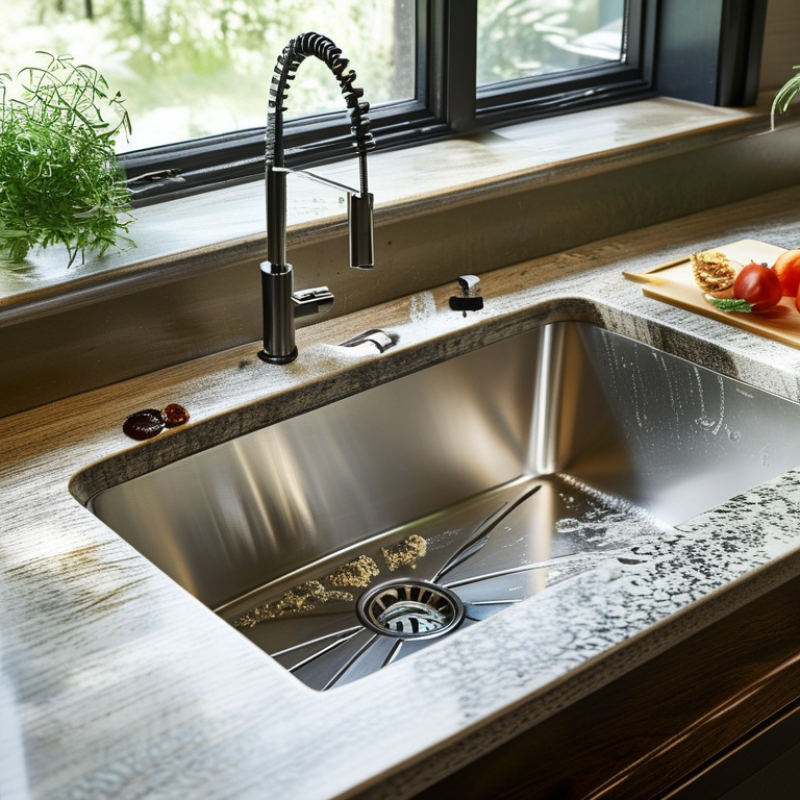
Understanding How Kitchen Sink Materials Resist Stains and Scratches
Material choice controls how a sink ages. The 2024 Houzz U.S. Kitchen Trends Study found stainless steel remained the choice of about two-thirds of renovating homeowners. Its resistance comes from a chromium-rich surface that repairs itself when exposed to oxygen. Brushed finishes also hide fine marks better than polished surfaces. However, stainless steel still scratches from cast-iron cookware, gritty cleaners, and sliding ceramic plates. Small habits matter. Rinse coffee, tomato sauce, and salty water quickly, then dry the bowl with a soft cloth.
Quartz composite sinks usually resist stains well because their dense mineral structure limits absorption. Dark colors can hide scratches, but light surfaces may reveal turmeric, tea, or metal transfer. Fireclay resists many household chemicals and tolerates hot cookware, yet sharp impacts can chip the glazed coating. In professional testing, ASTM F2324 evaluates plumbing fixtures for abrasion, stain, chemical, and thermal resistance. Look for test evidence, not vague claims. NSF/ANSI 51 also addresses material safety for food equipment, but it does not guarantee a scratch-proof surface.
During sink inspections, I have seen cleaning mistakes cause more damage than daily cooking. Steel wool leaves directional scars. Bleach left overnight can dull finishes. I once blamed poor material quality for a stain that was actually dried mineral scale. That mistake still matters. A nonabrasive cleaner, a nylon pad, and regular drying usually protect the surface better than aggressive polishing.
Choosing the best sink finish matters as much as selecting the sink material. A brushed stainless-steel finish hides small scratches and water marks better than a mirror polish. Its fine grain also creates a practical surface for daily cooking. However, always wipe along the grain. Random scrubbing can make the texture look uneven. Matte composite finishes reduce visible fingerprints and soften glare, but light colors may show coffee or turmeric stains sooner. Glossy fireclay surfaces resist staining well, although dropped cookware can chip their edges.
Tips: Use a soft sponge, mild dish soap, and a clean towel after washing. Avoid steel wool and harsh abrasive powders. Place a protective grid beneath heavy pans, but keep it clean because trapped grit can cause scratches. Rinse acidic foods quickly, especially citrus juice and tomato sauce. Check the manufacturer’s care instructions before using any polish.
From hands-on kitchen maintenance, I have found that finish quality cannot replace good habits. No surface is invincible. Even a durable coating can dull when exposed to repeated friction, standing water, or strong chemicals. I once left a metal pan in a wet basin overnight and noticed a faint mark the next morning. It was removable, but the incident changed my routine. A finish should conceal normal wear, not invite neglect. Consider your cleaning habits, water hardness, and cooking frequency before choosing the surface.
Surface hardness is one useful indicator of scratch resistance. These approximate Mohs hardness values show how common sink finishes compare; actual performance also depends on coating quality, cleaning methods, and impact resistance.
Higher Mohs hardness generally indicates better resistance to visible scratching. Non-porous finishes such as stainless steel, porcelain enamel, fireclay, and granite composite are also easier to keep stain-resistant with proper care.
Daily cleaning protects a kitchen sink better than occasional heavy scrubbing. The CDC recommends washing hands for at least 20 seconds, and the same patience helps remove residue from sink surfaces. After cooking, rinse away salt, coffee, tomato, and acidic juices immediately. Wipe the basin with warm water, mild dish soap, and a soft microfiber cloth. Do not leave wet sponges or metal cans inside. They can create dark marks and tiny corrosion spots.
For stainless steel, follow the grain, not circular motions. For composite or ceramic surfaces, use a non-abrasive pad and avoid powdered cleaners unless the care guide permits them. The U.S. Environmental Protection Agency’s Safer Choice guidance warns against mixing cleaning chemicals, even when stains look stubborn. One cleaner is enough. Usually. Dry the sink after wiping, especially around the drain and faucet base. Standing water leaves mineral rings as it evaporates.
The 2023 National Kitchen & Bath Association Design Trends Report highlights easy-maintenance surfaces as an important kitchen preference. That matters during daily use, not only during remodeling. A weekly inspection can reveal rough edges, dull patches, or scratches before they worsen. I still miss this step sometimes. A soft drying towel also reduces water spots, though it feels unnecessary on busy mornings. Replace abrasive scrubbers when they become stiff or gritty. Tiny trapped particles can scratch more than the stain itself.
| Sink Surface | Daily Cleaning Steps | Weekly Care | Common Stain Risks | Scratch and Damage Prevention | Products and Tools to Avoid |
|---|---|---|---|---|---|
| Stainless Steel | Rinse away food residue, wash with warm water and mild dish soap, then dry with a soft microfiber cloth. | Apply a small amount of baking-soda paste with the grain of the steel, rinse thoroughly, and dry completely. | Water spots, tea, coffee, food residue, and mineral deposits. | Use a sink grid or protective mat; always scrub in the direction of the grain; do not leave cast-iron cookware sitting in standing water. | Steel wool, wire brushes, chlorine bleach, abrasive scouring powder, and scrubbing across the grain. |
| Fireclay or Glazed Ceramic | Remove food particles, clean with mild dish soap and a non-abrasive sponge, rinse, and wipe dry. | Use a non-abrasive cream cleaner only when needed; rinse fully to prevent cleaner residue. | Tea, coffee, tomato-based foods, hard-water scale, and metal marks from cookware. | Do not drop heavy cookware; use a cushioned rack and avoid sudden temperature changes such as pouring boiling water into a cold basin. | Metal scouring pads, strong acids, abrasive powders, and impact from heavy objects. |
| Granite Composite | Rinse promptly, clean with mild soap and warm water, and dry the basin to reduce mineral buildup. | Remove deposits with a manufacturer-approved non-abrasive cleaner and a soft nylon brush. | Limescale, soap film, coffee, tea, and pigment from strongly colored foods. | Use a protective grid, avoid dragging metal cookware, and prevent prolonged contact with hot pans unless the care instructions allow it. | Harsh abrasive powders, metal scouring pads, oven cleaner, drain cleaner, and unapproved sealants. |
| Solid Surface Acrylic | Wash with warm soapy water and a soft cloth or sponge; rinse and wipe dry after use. | Use a non-abrasive cleaner for dull areas; fine surface marks may require professional or care-guide-approved refinishing. | Coffee, food dyes, grease film, and hard-water residue. | Never place hot cookware directly in the basin; use a trivet or rack and avoid cutting or scraping on the surface. | Scouring pads, abrasive cleaners, paint remover, strong solvents, and direct heat. |
| Porcelain-Enameled Metal | Rinse food residue, use mild soap with a soft sponge, and dry the surface after cleaning. | Treat metal marks with a gentle non-abrasive cleaner; inspect chips because exposed metal can rust. | Rust marks, coffee, tea, food coloring, and mineral scale. | Use a cushioned sink rack; avoid dropping heavy pans and never use the basin as a cutting surface. | Metal pads, harsh abrasives, impact tools, and prolonged exposure to concentrated chemicals. |
| Copper | Rinse immediately after use, wash with mild soap and water, and dry thoroughly to limit water spots and uneven oxidation. | Follow the finish-specific care instructions; some copper surfaces are sealed while others develop a natural patina. | Water spots, acidic foods, salt, and changes in natural patina. | Use a soft sink grid, avoid abrasive contact, and do not leave acidic or salty foods in the basin. | Abrasive pads, bleach, ammonia, acidic cleaners, and prolonged contact with harsh chemicals. |
| Universal daily rule: Remove debris promptly, rinse away soap and food residue, dry the sink after cleaning, and follow the surface-care instructions supplied with the sink. Never mix cleaning chemicals, especially bleach with acids or ammonia. | |||||
A clean sink needs gentle tools, not aggressive scrubbing. Start with warm water and a few drops of mild dish soap. Use a soft microfiber cloth for daily marks. For stainless steel, wipe in the direction of the grain. Circular scrubbing can leave visible swirls. A non-abrasive cream cleaner may help with dull spots, but test it underneath the rim first. Sink materials react differently, so follow the care instructions supplied with your sink.
Tips: Use a soft nylon brush around drains and seams. Sprinkle baking soda on damp surfaces only when the material allows it. Let it sit briefly, then rinse completely.
Never use steel wool, rough scouring pads, or powdered abrasives on delicate finishes. Avoid mixing cleaning products. A diluted white vinegar solution can remove some mineral film, but it may harm natural stone or certain coatings. Check the surface guidance before using it.
For dark stains, repeat gentle cleaning instead of pressing harder. Dry the basin after rinsing; standing water often leaves mineral rings. I once removed a mark too quickly and created a faint dull patch beside it. That mistake taught me to slow down and test first. Some scratches will not disappear completely. A professional refinishing service may be safer than repeated home polishing.
Minor sink damage is easier to repair when noticed early. A gray mark on stainless steel may come from metal transfer, not permanent damage. Wipe it with warm water, mild dish soap, and a soft microfiber cloth. Rub gently in the sink’s brushed direction. Never scrub across the grain.
For porcelain or ceramic surfaces, use a non-abrasive cream cleaner and a damp sponge. Test it under the rim first. Some cleaners can dull the glaze. Small scratches on composite sinks may improve with a manufacturer-approved repair compound, but deep cracks require professional inspection. Do not fill structural damage yourself. Water can enter unseen gaps and weaken the surrounding material.
Tips: Dry the basin after use. Keep a soft mat nearby. Lift heavy pans instead of dragging them. Avoid steel wool and harsh scouring powders. I once removed a faint mark too aggressively, creating a larger dull patch. That mistake was avoidable. Check the sink material before choosing any cleaner, because a method that works on stainless steel may damage porcelain. Repeated rubbing can also change the surface texture, even when the stain disappears.
: Stainless steel handles daily use well because its chromium-rich surface can repair minor marks. Brushed finishes hide scratches better than polished ones. Heavy cookware can still leave scars.
Usually, yes. Their dense mineral structure limits absorption from coffee, tea, and sauces. Light colors may reveal turmeric or metal transfer. Dark colors hide marks better.
Fireclay tolerates hot cookware and many household chemicals. Its glazed surface can chip when sharp cookware hits the edge. Heat is not the only risk.
Brushed metal finishes conceal fine scratches and water marks effectively. Wipe along the grain to keep the texture even. Random scrubbing may create visible streaks.
Rinse coffee, tomato sauce, citrus juice, and salty water quickly. Dry the basin with a clean, soft towel. Standing moisture causes trouble.
Choose mild dish soap, a soft sponge, and a nylon pad. Avoid steel wool and harsh abrasive powders. They can leave directional scratches.
A clean grid can separate heavy pans from the sink surface. Remove trapped grit regularly. Grit can scratch more than expected.
No. Testing can show abrasion, stain, chemical, and thermal resistance. It cannot promise permanent protection. No surface is invincible.
Dried mineral scale can resemble a permanent stain. I once blamed poor material quality incorrectly. A mild cleaner removed most of it.
Consider water hardness, cooking frequency, cleaning habits, and color. Glossy surfaces may resist stains but show chips clearly. Durability still needs care.
Choosing the right kitchen sink material and finish is the first step in protecting its appearance for years to come. Nonporous surfaces generally resist stains, while durable finishes can reduce the visibility of scratches and water spots. However, even the best sink requires proper care. Learning how to prevent stains and scratches on kitchen sinks begins with rinsing away food residue, drying the basin after use, and avoiding prolonged contact with coffee, tea, grease, and harsh chemicals.
Daily maintenance should involve a soft sponge, mild dish soap, and clean water rather than abrasive pads or aggressive powders. For stubborn marks, use a gentle cleaner and test it on a small, hidden area first. Minor stains may respond to a baking-soda paste, while light scratches can sometimes be blended carefully according to the material’s grain or surface instructions. Addressing small imperfections early helps prevent deeper damage and keeps the sink cleaner, smoother, and more attractive over time.

Nura Kitchen